
SUNY Schenectady adjunct contract extension would raise pay, adjust requirements
Get AI-powered insights, summaries, and transcripts
Subscribe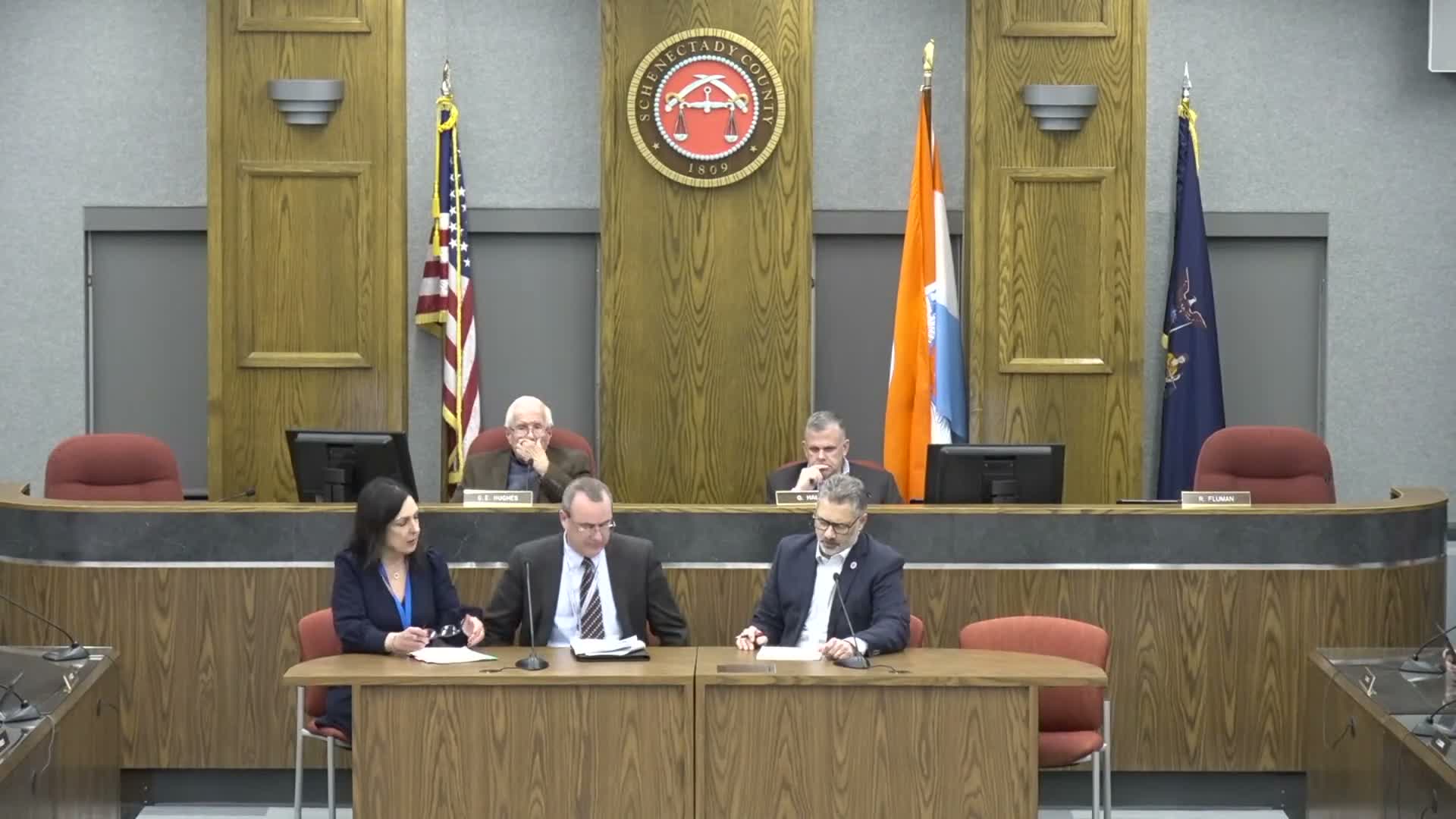
Summary
A county committee reported to the legislature a proposed three-year extension to SUNY Schenectady County Community College’s adjunct contract that includes immediate per-credit increases, a new longevity structure for music lesson instructors, and residency and qualification adjustments intended to aid recruitment and retention.
The Labor and Civil Service Committee reported to the full legislature a proposed extension of the collective bargaining agreement with the adjunct faculty unit at SUNY Schenectady County Community College that would raise pay and alter hiring and qualification rules.
Pat Ryan, vice president of administration at SUNY Schenectady County Community College, told the committee the extension would run for three years beginning Sept. 1, 2025, through Aug. 31, 2028, and include an immediate pay increase for many adjuncts. "What we're proposing is an increase of $72 per credit for the level 1 adjuncts," Ryan said, adding that year two and three would include $25-per-credit increases intended to bring adjunct pay closer to the Capital Region market and improve recruitment, particularly in STEM fields.
The proposal would keep a three-tier pay structure tied to longevity for most adjuncts and create a new tiered progression for music lesson instructors, who have historically been paid a flat rate regardless of tenure. Ryan said the college plans to set an initial rate for music lesson instructors in year one and then create three tiers so more-experienced instructors advance to higher levels. "We agreed, that experience is very important to us," Ryan said.
College representatives also said the agreement adds discipline-and-discharge protections that allow for union representation and adjusts teaching requirements in high-technical areas so relevant career experience may substitute for a master’s degree in some cases. The extension includes a requirement that adjuncts who teach solely online be New York State residents.
Paula Olhouse, the college’s executive director of human resources, described the mandatory training payment changes and the college’s rationale. On the training stipend, presenters said the payment is being increased to better compensate adjuncts for required compliance training and to recognize that such training can be time consuming.
Committee members asked how the increases position the college within local pay ranges. Ryan said the changes would move SUNY Schenectady from below market toward the regional middle: "We're going to be more in the middle," he said, noting area schools often pay $1,100–$1,200 per credit for adjunct faculty.
Members also pressed for context about adjunct reliance; college staff said adjuncts make up roughly 60% of instructional staffing at the college.
The committee moved and seconded a report recommending the item be placed on the full legislature’s agenda; the motion passed on a voice vote.
The full legislature will receive the committee’s report; any final approval would occur at a subsequent legislative meeting.