Get Full Government Meeting Transcripts, Videos, & Alerts Forever!
Get email alerts on the Recovery Residences topic
No spam. Unsubscribe anytime.
Coral Gables adopts state‑required rules for certified recovery residences amid neighborhood concerns
Summary
The Planning & Zoning Board recommended adoption of code changes implementing Florida Statute 397.487 to regulate certified recovery residences, approving the staff draft while adding a commentary asking the Commission to clarify review criteria for reasonable accommodations and administrative burden; members repeatedly raised safety, parking and service‑call concerns.
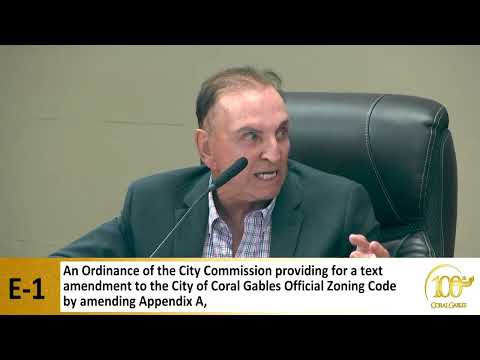
The board considered a state‑mandated code update to implement procedures for certified recovery residences consistent with Florida Statute 397.487. Staff said state law requires municipalities to adopt review and approval procedures by Jan. 1, 2026, distinguishing small residences (6 or fewer residents, treated as single‑family uses) from larger residences (7–14 residents) that must follow state licensing, spacing and other requirements.
Craig Southern explained the draft: certified recovery residences emphasize peer support and do not provide on‑site medical treatment, and approvals may be revoked if certification is lost or if conditions of approval are violated. Staff also described processes for reasonable‑accommodation requests and said the city manager or designee will review applications and may consult departments or external experts.
Board members voiced strong concerns about neighborhood impacts, raising questions about background checks, parking and emergency calls; staff and the city attorney advised that state law treats recovery residences as residences and limits local ability to impose use‑based restrictions such as mandatory background checks of residents. Several members asked staff to add clearer definitions or criteria to D‑1(a) and D‑1(b) (what constitutes a reasonable and necessary accommodation and what amounts to an undue administrative or financial burden) to reduce ambiguity and litigation risk. The board voted to recommend adoption and included a formal commentary urging clarification; roll call recorded a majority approval (motion recorded as 6–1).