Get Full Government Meeting Transcripts, Videos, & Alerts Forever!
Get email alerts on the Conservation Tdr topic
No spam. Unsubscribe anytime.
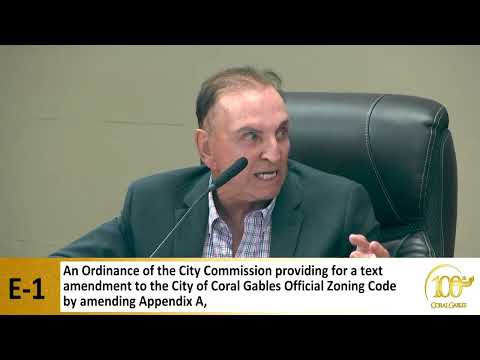
After heated debate, Coral Gables board narrowly backs conservation TDR program
Summary
The Planning & Zoning Board voted 4–3 to recommend a new conservation transfer‑of‑development‑rights (TDR) program that would allow property owners to convey ecologically valuable land to the city in exchange for TDR units; critics warned the draft is vague on valuation, receiving‑site limits, and could dilute historic‑preservation TDRs, and several members urged staff to return with clarifications.
Planning staff proposed a new conservation transfer‑of‑development‑rights (TDR) program to add a conservation component to the city's existing TDR framework, allowing property owners who permanently protect native habitat, mature tree canopy or mangroves (via a recorded conservation easement) to obtain transferable development rights.
Craig Southern described mandatory appraisal standards and two USPAP‑compliant appraisals to determine fair‑market valuation; staff also proposed review by the landscape beautification advisory board and final approval by the City Commission. Eligible sending sites would be assessed for habitat quality, canopy coverage and conservation value; sites with exceptional ecological value could qualify for bonuses after professional assessment.
The board engaged in a prolonged debate. Detractors, including several architects and longtime board members, said the ordinance is too open‑ended: they worried it would create a virtually unlimited supply of TDRs, dilute the value of historic‑preservation TDRs, impose high upfront costs on property owners (two MAI appraisals were cited), and leave receiving sites and conversion formulas unclear. Proponents said the program is voluntary, that appraisal and public‑hearing safeguards exist, and that receiving areas (CBD, North Ponce, Design Innovation District) are limited.
A motion to defer for further study failed. A subsequent motion to approve the staff recommendation carried on a 4–3 roll call. The board’s transmittal records multiple substantive concerns — valuation method, receiving‑site clarity and enforcement — and directs staff to return with edits and clarifications as the ordinance advances to the Commission.