Get Full Government Meeting Transcripts, Videos, & Alerts Forever!
Get email alerts on the Blight Designation topic
No spam. Unsubscribe anytime.
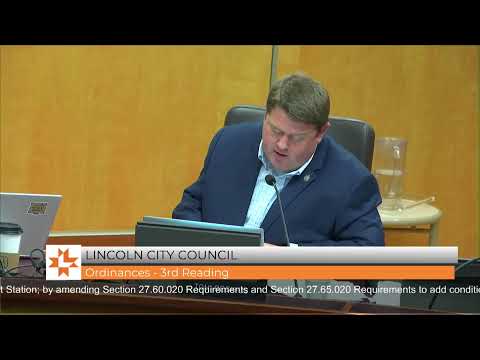
Lincoln council designates University Place/Clinton area as blighted and extremely blighted despite neighborhood objections
Summary
After a full public hearing and testimony from neighborhood residents alleging data and boundary errors, the City Council voted 6'0'00 to declare an area including parts of University Place and Clinton blighted and extremely blighted, allowing homeowners to pursue a $5,000 Nebraska state tax credit and enabling future redevelopment tools.
The Lincoln City Council voted unanimously Tuesday to declare an area roughly bounded by North 56th Street, Superior Street, North 27th Street and Holdridge Street both blighted and extremely blighted, a move city staff said will enable targeted redevelopment tools and allow owner-occupants to apply for a state $5,000 tax credit.
Urban development director Dan Marvin told the council the designation aims to support the University Place sub-area plan, restore older blight determinations and extend an extreme-blight designation that can make owner-occupied households eligible for a Form 1040NEB state credit. "Lincoln's about a 104 square miles," Marvin said while explaining the study's scale and the share of the city currently designated blighted.
Neighbors who testified urged caution. Abigail Hazard, a Clinton resident and founder of LNK Insight, said the study relied on data drawn from census blocks outside the formal study area and raised a public-notice concern: "the public last public notice was 9 days ago," she told the council, arguing the approach could expose the city to legal risk. Anthony Vinton, another Clinton resident, said the study's unemployment and poverty figures appeared inflated by using areas outside the boundary and warned that redevelopment could increase density and strain local infrastructure.
City staff and legal counsel defended the methodology. Planning staff and the consultant said census-tract overlays are a standard approach for computing unemployment and poverty metrics, and the city noted county-assessor data underlies the housing-condition figures. Jennifer Hyatt of urban development said multiple jurisdictions have used this methodology and that legal teams reviewed it.
Council members acknowledged resident concerns about stigma and density but said the designation does not itself change zoning or automatically increase density; any rezoning or redevelopment projects would require separate review and public processes. The council approved the blighted-and-substandard resolution and the extreme-blight declaration on roll calls, each recorded as 6'0'00 in favor.
The next steps described by staff include pairing the designation with a redevelopment plan that would incorporate University Place sub-area goals and pursue targeted investments such as pedestrian lighting on Holdridge Street and other infrastructure improvements. City staff said the state tax credit program has been used by more than 500 homeowners since the city began pursuing these designations.