
Anaheim High highlights redesign: deeper learning, new schedules and AI tools to support teachers
Get AI-powered insights, summaries, and transcripts
Subscribe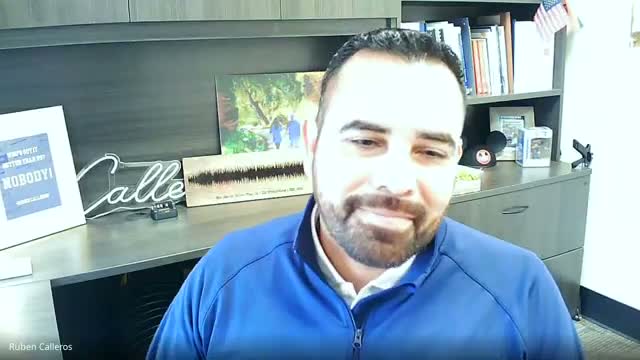
Summary
Anaheim High School leaders described a data‑driven redesign that emphasizes student voice, advisory, cross‑curricular teams and exploring a 4x4 block schedule. They said the district’s learning platform and AI features are being used to synthesize student feedback and reduce teacher workload, not replace teachers.
Anaheim High School is positioning itself as a model of school redesign that pairs systematic student supports with deeper learning, its principal and a lead teacher told a district podcast. The superintendent of the Anaheim Union High School District convened principal Ruben Caieros and lead teacher Bill Johnson to describe how the school used student feedback and structural changes to improve outcomes.
The superintendent opened by noting Anaheim High’s demographic challenges — high poverty and a largely Latino, first‑generation student body — and said the school’s A–G completion rates have moved toward roughly 75% while graduation rates are now in the mid‑90s, figures raised on the program by the superintendent. "Anaheim High School is really the poster child for redesign," the superintendent said.
Ruben Caieros, principal of Anaheim High School, said the work began with a yearlong schoolwide site‑mapping exercise that asked staff, students and families "What is the purpose of our school?" He described synthesizing that input with teacher leaders into professional learning communities and a community‑school approach that connects counseling, social workers and psychologists to classroom instruction. "What we found in the data was that students that are part of Puente, DLA, or Independent Learning Center ... have deeper connections with adults," Caieros said, explaining why the school plans to expand advisory time so every student has a consistent adult check‑in.
Bill Johnson, lead teacher and former AUHSD alum, emphasized a shift "from silos to systems," calling deeper learning and the district's emphasis on the "5 C's" (soft skills) central to that change. "One of AUHSD's core values is working in systems, not silos," Johnson said, describing teacher‑led professional development and an ongoing, anonymous student survey — "street data" — that has yielded candid feedback used to reshape instruction.
Leaders described three concrete redesign priorities emerging from the surveys and outside research: exploring a non‑traditional schedule (the 4x4 block to free up teacher planning and allow deeper units), instituting an authentic advisory/homeroom so adults consistently monitor student progress, and building stronger cross‑curricular teams that connect academics to career pathways.
The podcast also addressed technology. Johnson said the district learning management system (identified on the program as eCadence) and its AI‑enabled features are being used to synthesize student responses and class data so teachers receive timely feedback and can iterate instruction more quickly. "All that data gets kinda put together and synthesized and organized in a way that cuts down on the amount of time it takes to then get into that continuous improvement cycle with teachers," he said.
Responding to concerns that AI could replace educators, Caieros framed AI as a tool that can help "frame your lessons" and create authentic feedback loops but stressed that "teaching is an art" that requires human delivery and relationships. The hosts and guests illustrated that approach with an example from Johnson: a small group of AP students co‑designed a project using AI tools to produce a mini documentary tying physics topics to real‑world applications; Johnson described himself as "the guide on the side."
The episode included a personal example of the school’s inclusive approach: Caieros told the story of a newcomer student who arrived with a leg amputation after a violent accident in his home country, was bullied, then chose to share his story in class — an act that, according to Caieros, changed peer behavior and led the school to help secure a new prosthetic.
Leaders said the redesign is ongoing: pilot changes to schedule and advisory, broader rollout of student feedback systems, and deeper collaboration across teachers will proceed as the school tests what works. No formal votes or district policy changes were recorded on the program.
The superintendent closed by praising Anaheim High School’s staff and students and suggested the school’s combination of student voice, integrated supports and instructional redesign could offer lessons for other district sites.