
HHS projects nearly $20M general-fund lapse and rising vacancies; unfunded positions total ~400
Get AI-powered insights, summaries, and transcripts
Subscribe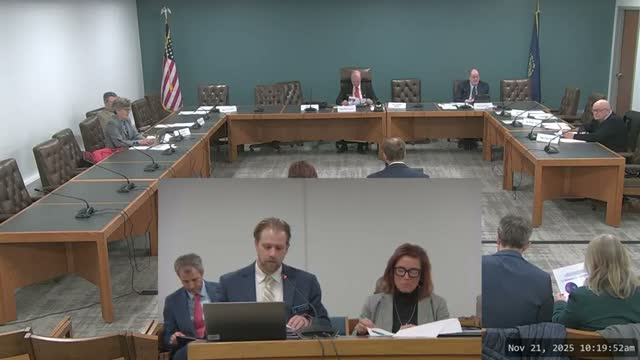
Summary
HHS CFO Nathan White told the oversight committee the department currently projects a general-fund lapse just shy of $20 million for FY26 and described vacancy trends driven in part by ~400 unfunded positions among roughly 3,200 authorized roles; agency officials warned statutory limits prevent some funds from lapsing and noted revenue uncertainty.
Nathan White, chief financial officer for the Department of Health and Human Services, presented the department’s quarterly budget and staffing update Nov. 21, showing HHS accounts for a large share of state health spending and faces vacancy and lapse challenges.
White said HHS represents about 44% of the state’s total operating budget and roughly 56% of the general fund portion of that budget. Within HHS’s operating budget, he said federal funds are roughly half of the total, general funds roughly 31%, with other funds making up the remainder.
Using historical patterns, White said an early projection placed the department’s general fund lapse at about $24.1 million; the department’s more current projection is "just shy of about $20,000,000." He warned, however, that statutory provisions restrict which funding sources can lapse in the first year of a biennium — the department estimates only about 33% of its general funds are eligible to lapse in the first year under those provisions.
White also described staffing and vacancy trends. The department has about 3,200 full-time authorized positions with roughly 400 unfunded positions in the current biennium; that unfunded gap accounted for about a $30 million reduction across the biennium, White said. He noted HHS personnel costs are a small share of the total HHS budget while utilization-driven program costs make forecasting more complicated.
Committee members asked how one-time 'back-of-the-budget' mandatory cuts will interact with lapse projections and urged greater coordination with the governor's budget office to understand revenue impacts; White recommended the governor's finance staff be consulted because they direct some of the mandatory reductions and appropriation timing.