
State and federal briefings highlight budget deficits, Proposition 4 funds and local grant opportunities
Get AI-powered insights, summaries, and transcripts
Subscribe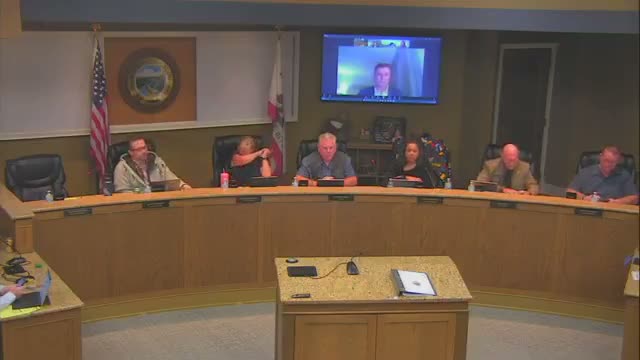
Summary
Consultants told the Oroville City Council they see a difficult state fiscal outlook, identified Proposition 4 climate bond buckets that could help local projects, and urged early engagement on state and federal bills; federal lobbyists noted a potential loss of USDA rural‑development eligibility tied to population thresholds.
The council received separate state and federal updates and a grants briefing during its Dec. 9 meeting, outlining funding opportunities and looming fiscal constraints.
Dylan, representing Paul Yoder's state lobbying team, warned the council the Legislative Analyst's Office projects an $18,000,000,000 deficit for California in the coming year and said lawmakers will likely prioritize health care and other cuts; he pointed council members to Proposition 4 climate bond funding that could support local projects. "Dollars 1,200,000,000 for safe drinking water, dollars 400,000,000 for wildfire and forest mitigation, dollars 100,000,000 for extreme heat," Dylan said when listing allocations tied to the bond.
On the federal side, Chris (Ferguson Group) reviewed efforts to advance earmarks and grant opportunities, noting Oroville pursued an earmark for Southside Oroville infrastructure earlier in the year. He also described a complication with USDA rural development eligibility: the city's population count exceeded the program threshold (20,000) following evacuations and temporary relocations after the Camp Fire, potentially disqualifying the city from certain rural funds unless the city can show alternate counts or mitigation steps.
Grants team member Marissa Berger (TFG) said the consultants have pushed more than 50 grant alerts and roughly 100 funding opportunities to city staff over the past year and are tracking around 90 candidate projects on a funding matrix, from sidewalks and storm drainage to biomass and levee work. Marissa noted one specific federal program — USDA community facilities — as a fit for certain local priorities and suggested technical adjustments to project proposals to improve competitiveness.
Why it matters: The briefings flagged both constraints and near‑term opportunities. State bond dollars and federal programs (including potential Army Corps or Water Resources Development Act authorization) could fund infrastructure like levee improvements; conversely, a sharp state fiscal outlook and federal appropriations timing may speed or slow funding availability.
Local follow‑ups: The mayor reported that an Army Corps levee survey will yield a draft presentation identifying $3–5 million in potential levee work, which staff asked to include in grant targeting. Consultants recommended the council plan for rapid action in January when the legislature reconvenes, and consider a March–April visit to Washington, D.C., to press for earmarks and federal support.
Ending: Consultants said they will continue to track grant opportunities and that staff will return with targeted requests; no funding awards or binding commitments were authorized at the meeting.