Get Full Government Meeting Transcripts, Videos, & Alerts Forever!
Get email alerts on the School Transportation topic
No spam. Unsubscribe anytime.
Merrimack Valley School Board opts not to enforce 1.5-mile walk zone after heated debate over safety and driver shortages
Summary
After extensive public comment about safety and family hardship, the Merrimack Valley School Board voted by voice to decline enforcement of a transportation committee recommendation to make a 1.5-mile walk zone around Pennacook Elementary. Board members and staff cited an ongoing bus-driver shortage, while parents urged contracting or budget adjustments to keep routes running.
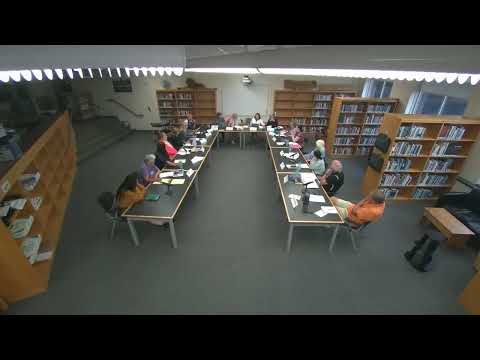
The Merrimack Valley School Board on Aug. 4 voted by voice to not enforce a proposed 1.5-mile walk zone around Pennacook Elementary, rejecting a recommendation from the district's transportation committee after extended public comment and a lengthy board discussion.
The vote came after parents and residents said cutting bus service would endanger young children and impose financial burdens on working families. “I urge the board to do the right thing and fund the contractor,” said James Ziegra, a Pentacook resident and parent, arguing the district’s $47,900,000 budget could absorb the roughly $180,000 annual contract the district was offered. “A lot of these roads don’t have sidewalks,” Ziegra said, adding that parents worry about 5- to 10-year-olds crossing busy streets.
District staff and transportation leaders warned the board that the primary problem is a shortage of certified drivers. The district reported having 13 rostered drivers, with seven people in the pipeline for certification; the director of transportation said even with training in place the district remained about seven drivers short of covering 20 runs. “We are 20 runs, 13 drivers, 7 down, 5 in training,” the director said when describing the staffing shortfall, and noted a contractor the district consulted could not guarantee drivers either.
Board members explored alternatives during the debate: contracting for services (at about $180,000 annually, as discussed in committee), offering higher pay to recruit drivers, setting up crossing guards and crosswalks, coordinating with the city on safe-route infrastructure, and creating organized walking-buddy systems. Several members urged a more gradual, proactive approach and more community engagement before making abrupt changes with less than 30 days' notice to families.
A motion to reject the transportation committee’s recommendation and to not make Pennacook a sole walking zone was made on the floor and seconded by Sally Hersh Dickinson. The chair called for a voice vote and announced the motion carried; the transcript records the voice 'Aye' support but does not include a roll-call tally.
The board did not adopt a specific, immediate alternative in the meeting record; members instructed staff and the committee to continue exploring contracting options, safety measures such as crossing-guard placement and flashing lights, and community-based approaches to reduce risk if routes must be adjusted. The board did not set a formal deadline for next steps in the transcript.
The decision keeps bus service as-is for now but leaves unresolved operational strain: district staff said it remains possible routes could still be canceled if drivers are unavailable on a given day, a situation the board and staff described as unacceptable and that they will continue to address in coming meetings.