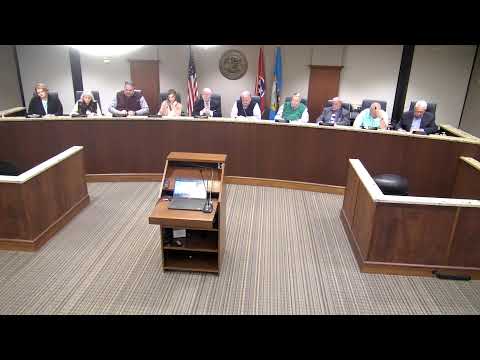
Lenoir City council forwards 0.75%-point sales-tax referendum after presentations from Parks & Recreation and Habitat for Humanity
Loading...
Summary
The Lenoir City Council voted to place a proposed sales-and-use tax increase (from 2.00% to 2.75%) on a future agenda after hearing presentations from Parks & Recreation on overcrowded facilities and Habitat for Humanity on a housing repair and rebuild program that would use referendum funds to assist seniors, veterans and people with disabilities.
Lenoir City council voted to advance a proposed local sales-and-use tax increase — raising the local rate from 2.00% to 2.75% — for public consideration after presentations from the city’s Parks & Recreation department and Habitat for Humanity.
The ballot measure is framed to create a Housing and Community Preservation Fund, with Habitat identified as a primary implementing partner to deliver a four-part program of critical repairs, rebuilds, community partnerships and moderate-income supports. The council approved a motion to place the proposal on a future agenda by roll call, with the motion passing after members voted Aye.
Why it matters: presenters said the referendum would provide a recurring local revenue stream for facility maintenance and housing repairs that current grant programs do not sustain. Zach, a Parks & Recreation presenter, told council that youth sports participation has surged — citing growth rates of about 13% for flag football, 22% for spring baseball/softball and 35% for fall baseball/softball — and said the department lacks staff and field capacity to meet demand. He estimated about 178 more children would need service in the coming season and said the lowest turf-replacement bid for a roughly 7,600-square-foot field was about $90,000.
Habitat for Humanity’s presentation focused on its critical-repair model for low-income homeowners. Chris Callahan, identified in the presentation as Habitat’s director of homebuyer/homeowner services, described the program intake (income eligibility screening, home assessment, work-order development, bid solicitation and subcontractor selection), a five-year restricted covenant recorded on assisted homes and the family contribution toward deed-recording fees. Video testimonials showed that accessibility improvements such as ramps can materially affect residents’ mobility and safety.
Officials stressed accountability: Habitat presenters said they already work with federal and state funders and that funds drawn from the proposed local program would be held in a separate, interest-bearing account with annual audits and regular reporting to the city.
On revenue and scale, a council member explained the local sales-tax structure to put the cost in perspective: the proposed increase was described as the equivalent of about "75¢ on $100 worth of groceries." The same speaker noted that, under the current distribution, the city receives a small fraction of overall sales-tax collections and that the city’s share is divided among several recipients including the school system.
What council did: the body voted to approve two procedural motions related to agenda items. One motion authorized the mayor to enter a joint-call memorandum (motion passed) and the subsequent motion approved moving forward with the proposed sales-and-use tax measure as described on the agenda; council approved that motion on a roll call with members recorded as voting Aye.
What’s next: advancing the item puts the referendum on a path for council consideration and public review; the timing and final ballot language will be set by the council in subsequent meetings. Presenters said if voters approve the tax, Habitat would begin by expanding the existing critical-repair and rebuild initiatives, then explore community partnerships and moderate-income supports.
Quotes and attributions in this story come from the council meeting transcript and the presenters: "75¢ on $100 worth of groceries," (city finance discussion) and Zach’s summary of program growth and capacity struggles. Other cost and eligibility details (e.g., the $90,000 bid, the 7,600-square-foot turf area, five-year restricted covenants, and income eligibility at under 60% of area median income) were presented to the council by Parks & Recreation staff and Habitat representatives during the meeting.
Funding, oversight and limits: presenters cautioned that grants can cover initial capital costs but do not typically sustain long-term maintenance; Habitat said its process draws down third-party funds only after final certification and that the organization would submit invoices and regular reports to funders. The council did not adopt final ballot language or an ordinance at this meeting; it approved moving the item forward for further consideration.