Wyoming Public Health Laboratory seeks revenue and budget authority as pandemic funds end
Loading...
Summary
Laboratory leadership told the appropriations committee that pandemic-era federal funds have ended, equipment and service agreement costs have climbed, and a fee study suggests stepwise fee increases; the department is proposing budget authority and will consult partners before rule changes.
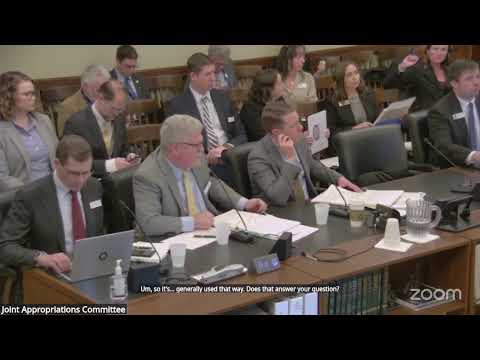
Joseph Reed, administrator of the Wyoming Public Health Laboratory, and Department of Health leadership told the Joint Appropriations Committee that pandemic‑era federal funding that supported expanded lab services has largely ended and the lab faces rising costs for equipment maintenance and software agreements.
Why it matters: the public health lab provides essential testing (newborn genetic screens, chemical testing, law enforcement and clinical diagnostics) across the state; preserving laboratory capacity affects public health surveillance and clinical care continuity.
What was presented: Reed said the lab has completed a fee study comparing peer states and private providers and plans stepwise fee adjustments under rulemaking to cover increased operating costs. The lab also identified a federal 'fiscal cliff' as one‑time federal funds expire; some now‑regular functions are supported by special revenues that the department is examining for transitional support.
Department CFO Eric McVicker and Director Johansen said software maintenance and service agreements have increased substantially in recent years, in some instances doubling, and recommended budget authority to continue current service levels. The department noted it is working with ETS on system transitions and with agency partners who pay lab fees to assess capacity to accept fee increases.
Next steps: the department will continue stakeholder outreach on fee changes, adjust budget exhibits to correct line‑item coding as needed, and return to the committee with updated revenue projections and proposed rule adjustments.
Representative Sherwood and others asked whether lab special revenue could offset part of the request during a transition; lab staff said that is under review, but cautioned that fee changes affect other state agencies and service partners and must be implemented carefully.