Wyoming outlines 'Bear Care' catastrophic plan and $500M placeholder in Rural Health Transformation application
Loading...
Summary
Department of Health Director Stephan Johansen described a conceptual catastrophic ‘Bear Care’ benefit inside Wyoming’s Rural Health Transformation (RHT) application and a placeholder federal spending authority; lawmakers pressed on sustainability, perpetuity financing and negotiations with CMS.
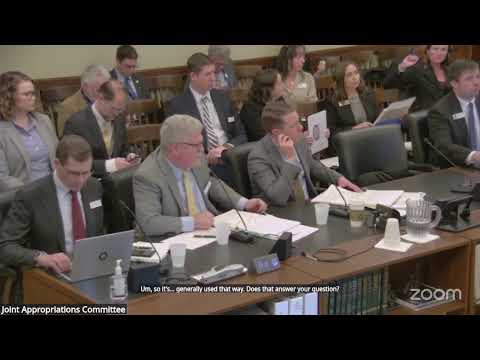
Director Stephan Johansen told the Joint Appropriations Committee the Wyoming Department of Health included a conceptual public health benefit—branded in the application as 'Bear Care'—in its Rural Health Transformation (RHT) federal application and that the department has included a federal spending‑authority placeholder in its budget in case an award is made.
Johansen said Bear Care is intended to be a limited, catastrophic coverage option that would pay for major, non‑shoppable episodes of care (for example, emergency department visits and inpatient admissions), not a full replacement for Affordable Care Act marketplace plans. He described the concept as designed to cover the ‘‘bare necessities’’ of major medical events at a lower premium with limited benefits such as excluding regular office visits and prescription drug coverage.
Why it matters: the RHT program represents an unusually large potential federal investment in rural health infrastructure and service redesign; Wyoming’s approach pairs system transformation investments (critical‑access hospital incentives, EMS and workforce development) with a consumer‑facing catastrophic product aimed at individuals and small employers.
Key figures and approach: Johansen said the department modeled a conservative floor of $100 million per year for five years (a $500 million floor across five years) as part of the application, and included an estimate of roughly $340 million for the rural health transformation placeholder, with $98 million related to supplemental payment programs in the summary document. He said part of the department’s strategy is to use some of any award to create an irrevocable ‘perpetuity’ account intended to seed longer‑term, sustainable system changes beyond the federal grant period.
Committee concerns and response: legislators repeatedly pressed Johansen on sustainability and the risk that federal funds could create an unsustainable state obligation after five years. Johansen said the department designed the application to be conservative, intended to fund system changes and seed a perpetuity to avoid a fiscal cliff. He also said the state is actively negotiating with CMS and expected additional federal questions and potential award details to arrive in the weeks following the hearing.
Representative Co‑Chair Bear and others voiced skepticism about the state operating insurance‑like benefits and suggested alternative priorities such as shoring up infrastructure (hospitals and EMS). Johansen and deputy director Franz Fuchs said the application balances infrastructure payments and programmatic innovations and emphasized extensive public and provider engagement in designing the proposal.
Next steps: the department said it will return to the committee with details if and when the federal government announces awards and will seek further legislative engagement on any state policy actions the federal guidance requires.