
Sunnyvale commission backs study of accessible rental registry to help tenants understand rights
Get AI-powered insights, summaries, and transcripts
Subscribe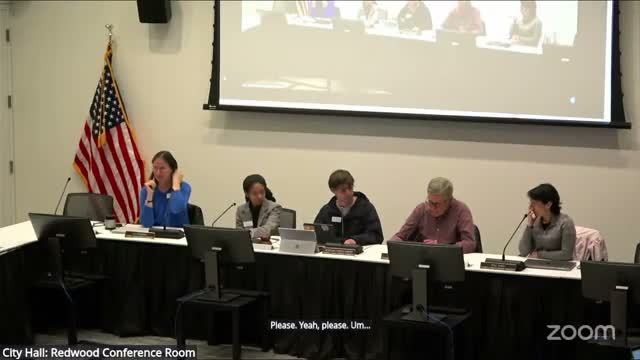
Summary
The Housing and Human Services Commission voted unanimously on Nov. 24 to forward a study request for an accessible rental registry for council consideration, saying the tool should help tenants know rights under local tenant-protection ordinances, support landlord compliance, and help the city enumerate rental housing stock.
The Sunnyvale Housing and Human Services Commission voted unanimously on Nov. 24 to forward a study request asking staff and the city manager’s office to examine whether the city should develop an accessible rental registry modeled on tools used in neighboring cities.
Commissioner Duncan said the goal is preventive: "Propose that the city studies the creation or the establishment of a citywide registry of rental units and landlords modeled on systems in place in other cities," he said, describing the registry as a way to ensure tenants understand rights under the city's recent tenant-protection ordinances and to help the city enumerate its rental stock.
Commissioner Stewart moved to support the study proposal and Vice chair Rivera seconded. After working together to condense the request into a one-sentence submission suitable for the new council priority process, the commission approved the motion with all present voting yes; Commissioners Weiss and Davis were absent.
Staff cautioned the commission that maintaining a registry requires ongoing staff time and periodic updates. Amanda, the city's housing officer, noted that other cities operate portals and that the commission should balance utility with the administrative burden: "My greatest concern would really be the staff time...who will manage it, how frequently are they supposed to be updating the registry," she said.
Public-comment speaker Marie Bernard, representing local safety-net services, urged the commission to pursue tools that prevent homelessness and support tenants, noting that organizations in the county stand ready to partner on outreach and education. "We would love to do whatever we can to contribute to and use that database," Bernard said.
Commissioners discussed scope and accessibility: whether the registry should cover all rental units or begin as a pilot for larger properties, whether it should indicate Section 8 eligibility and wait lists, and how non-digital access (paper notices or multilingual materials) could be incorporated. Commissioners settled on a high-level study request so staff can investigate feasibility and options; the commission also discussed forming a small subcommittee to brief council members with additional context before the February council priority workshop.
Next steps: staff will transmit the approved one-sentence study request to the city manager’s office. Council members may choose to incorporate the item into one of their three council priority projects for formal analysis; any detailed design, scope, or implementation plan will be developed only if the council advances the idea through staff analysis and budgeting.
The commission emphasized that the motion asks only for a study and does not commit the city to building the registry or funding its operations without later council approval.