Get Full Government Meeting Transcripts, Videos, & Alerts Forever!
Get email alerts on the Committee Decorum topic
No spam. Unsubscribe anytime.
Advisory committee recommends formal decorum rules for legislative hearings
Summary
The Advisory Committee on Capital Area Security reviewed draft committee decorum language recommending clearer conduct rules, enforcement authority for chairs and the Sergeant at Arms, and designating the Minnesota State Capitol Security Division for criminal investigations.
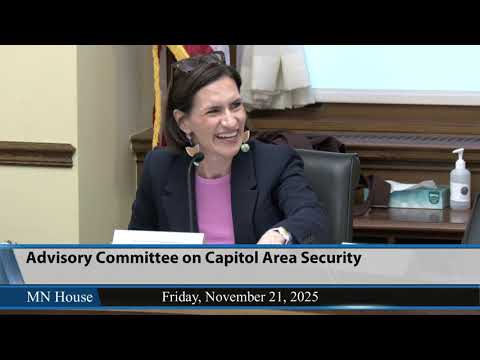
The Advisory Committee on Capital Area Security on Nov. 21 reviewed draft decorum language advising the Minnesota House and Senate to adopt clearer, enforceable conduct rules for committee hearings. Chair Flanagan introduced the provision, noting the draft was prepared by the Department of Public Safety and reviewed by the House and Senate Sergeants at Arms.
Committee advisors told members the proposed rules would set a uniform floor of expectations for public and member conduct — for example, prohibiting disruptive behavior, the use of video cameras in hearings, and signs in the hearing room — and would specify enforcement steps, including giving the committee chair authority to clear a room and call on the Sergeant at Arms to assist. The sergeant at arms’ presentation also recommended designating the Minnesota State Capitol Security Division as the investigatory authority if potential criminal activity occurs on Capitol grounds.
Senator Westland and other members said they favored a clear, written baseline so chairs and security staff have enforceable guidance, but they cautioned that adopting joint rules for both chambers could be difficult in practice. Representative Nash and others urged the committee to consult House and Senate chief clerks and noted many member-conduct matters already appear in existing rules. Chief Justice Hudson and judicial staff described a layered judicial approach — building-wide signage and entry screening combined with courtroom-specific rules — as a possible model for the committee’s language.
The committee did not take a formal vote on the decorum provision at the meeting. Chair Flanagan said the committee will collect suggested edits and return the language for further review at a future meeting ahead of the ACAS final report.