Get Full Government Meeting Transcripts, Videos, & Alerts Forever!
Get email alerts on the Budget Adoption topic
No spam. Unsubscribe anytime.
Montgomery County Legislature adopts 2026 operating budget after three amendments; cuts director-level finance post
Summary
The Montgomery County Legislature voted to adopt the 2026 operating budget as amended after passing three amendments that adjusted line items and removed a director-level finance position; legislators debated grant accounting, ARPA limits and the source for a proposed farmland-protection fund.
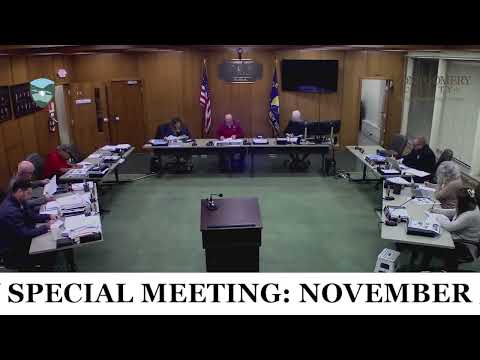
At a special meeting, the Montgomery County Legislature voted to adopt the 2026 operating budget as amended after approving three separate amendments that changed several line items and removed a director-level finance position.
Sarah, who spoke during the public hearing on the budget, urged the Legislature to retain the director of finance post. "So my ask to you this evening is to reconsider the elimination of the director of finance position and not reallocate it to a lower position," she said, adding that the county’s director of finance has overseen contracts and payments for every mental-health provider the county does business with and helped secure grants including a $5,200,000 lead-poisoning prevention award.
Why it matters: The amendments changed where revenue and expenses were recorded for several grants and altered the financial-impact statement used to compute the tax levy. Budget staff described corrections to office-supplies and lead-prevention revenue lines and said the net effect changed total appropriations and the tax-levy percentage to about 2.27% for 2026.
County counsel told the Legislature it cannot "gift those dollars to private corporations" under the New York State Constitution, a factor that framed members’ reluctance to make a direct appropriation to a nonprofit. The meeting included discussion of prior ARPA (federal) allocations that had funded a nonprofit program in prior years.
Members debated and passed three amendments. The first set of line-item corrections was moved and seconded, and the chair called the voice vote, which passed. A second amendment proposed by Martin would strike three specified lines including the director-of-finance entry; members recorded "aye" votes and the chair declared that amendment passed. A third amendment adjusted the total appropriations and tax-levy figures; that amendment also passed.
The chair then moved to adopt the 2026 operating budget "as amended," and the Legislature approved the resolution. Members asked staff follow-up questions about a separate farmland-protection resolution that had been passed previously but was not yet funded in the 2026 spending plan; the board agreed to revisit that funding in January rather than add the $250,000 line now.
What remains clear from the meeting is that the adopted budget reflects technical corrections to grant accounting, a removal of one director-level finance line as a budget amendment, and continued uncertainty about how to fund the farmland-protection initiative without using general fund balance.
The Legislature closed the meeting after handling final procedure items and announcements. The January session will revisit the farmland-protection funding and any additional changes to the 2026 budget.