Get Full Government Meeting Transcripts, Videos, & Alerts Forever!
Get email alerts on the Finance Report topic
No spam. Unsubscribe anytime.
EDC finance report: sales‑tax timing, one‑time payments and 340 days of fund balance
Summary
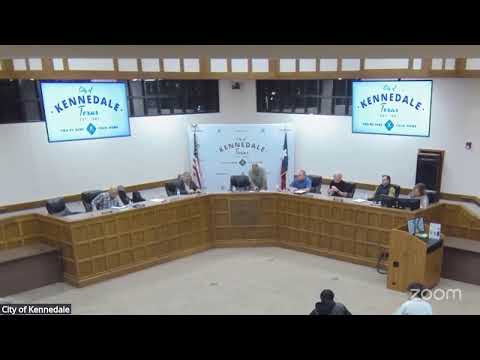
At the November Kennedale EDC meeting, staff reported sales tax receipts lag two months (October numbers appear in December), one‑time payments (final Texas Leverage Fund loan payment and full insurance premium) pushed operations spending higher, and the EDC reported roughly 340 days of fund balance remaining.
Speaker 2 reported to the Kennedale Economic Development Corporation that sales tax revenue for October will not be reflected in the reports until December because collections are reported two months behind. "Our sales tax revenues, we're really not gonna see October's numbers until December," Speaker 2 said, adding that being under 1% of budget at this point is consistent with last year's position.
Speaker 2 provided a short financial overview: rental fees are tracking at about 8% of budget; EDC operations expenditures stand at 21.5% of budget, driven in part by one‑time entries. "The Texas Leverage Fund — that was a loan that the EDC had taken out — FY '26 was a final year that we had to make payments on that. Rather than extending that out throughout the year, we made the payment one time in October. We found some interest savings by doing that," Speaker 2 said. Speaker 2 also said the EDC paid its insurance in full in October, which contributed to the higher expenditures in that month.
Speaker 2 said town center expenditures are a little under pace and reported the organization has "340 days of fund balance remaining." When asked for the total October expenditures, Speaker 2 directed members to the written report for detailed totals. Speaker 3 raised a clarification about the fiscal year end and the group confirmed the local fiscal year closes in September, which affects year‑to‑date comparisons.
The presentation emphasized timing effects and one‑time payments as explanations for budget variances rather than ongoing overspending. No formal budget action or vote on a budget amendment was taken at the meeting; the finance report was presented for the board's information.