Get Full Government Meeting Transcripts, Videos, & Alerts Forever!
Get email alerts on the School Facilities topic
No spam. Unsubscribe anytime.
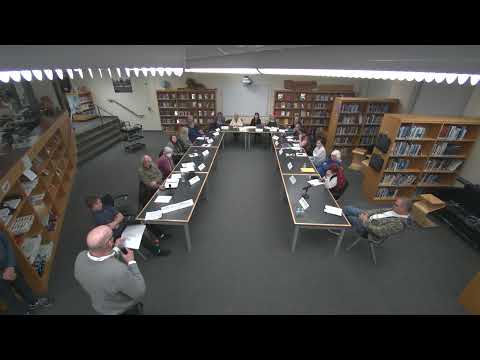
Merrimack Valley board votes to pursue phased renovations at Washington Street Learning Center amid budget concerns
Summary
The Merrimack Valley School Board on Nov. 3 approved a facilities committee recommendation to keep programming at the Merrimack Valley Learning Center on Washington Street and to pursue a phased renovation plan; the 9–1–1 vote followed hours of debate over estimated costs, revenue offsets and the district's deficit.
The Merrimack Valley School Board voted 9–1–1 on Nov. 3 to accept the facilities committee’s recommendation to maintain programming at the Merrimack Valley Learning Center (Washington Street School) and to move forward with a phased plan to improve the facility.
The motion, made by Jessica Wheeler Russell and seconded by Stacy Jarvis, follows months of committee work and a facility assessment the board referred to as the Bonwell report, which estimates roughly $5,000,000 in needs for the building. Board members and members of the public debated whether the improvements should proceed now, how the district would pay for them and whether a separate warrant or public hearing is required for taxpayer approval.
Why it matters: The Learning Center provides alternative and special-education programming the district says reduces costly out-of-district placements and keeps students close to peers and community supports. Supporters told the board that the program’s proximity and specialized environment are critical to students’ mental-health and graduation outcomes; opponents warned the board to be cautious about committing money while the district still carries a multi-year deficit.
Details of the motion and finances Jessica Wheeler Russell, who presented the facilities committee recommendation, moved that the district “maintain the current programming at NVLC, the Merrimack Valley Learning Center, and move forward with the plan to improve the facility.” The measure passed by roll call: Tracy Bricky, Sally Hirsch Dickinson, Melissa Muzzy, Jessica Wheeler Russell, Laura Vincent, David Nesbitt, Julia Jones, Stacy Jarvis and Lorna Carlisle voted yes; Amanda York voted no; Tom Laliberte abstained. The chair announced the final tally as “9 yeses, 1 no, 1 abstention.”
Board discussion cited the Bonwell facility assessment as the basis for planning and emphasized a phased approach. Facilities staff member Fred said the work could take seven to ten years and that the first priority would be an elevator to provide third-floor access. Fred noted an elevator quote that he characterized as “$723 with 10% contingency,” which was later discussed as about $723,000 plus contingency and architect/engineering fees, bringing an early-phase total closer to $900,000 depending on unknowns such as asbestos abatement and bidding outcomes.
Administrators described possible funding sources to limit immediate budget impact. Sam (finance presenter) and other administrators said roughly $30,000,000 of district encumbrances exist, with about $8,000,000 currently unencumbered and approximately $883,000 of that in lines the district can more directly control for site and curriculum projects. The district also identified revenue from tuition for out-of-district students (quoted in the meeting as $70,000 per student) and existing program revenue; administrators said expanding out-of-district tuition seats could offset some renovation costs over time but cautioned that the district is operating with carryover obligations from prior years.
Public comment and program defenses Several parents and community members urged the board not to sell the Washington Street building and described the Learning Center’s role in keeping students in-district. Seeley Longnecker said, “Please don't sell Washington Street School,” arguing that the learning center provides in-district alternatives that avoid expensive out-of-district placements. Dave Armstrong described his son’s multi-year experience in the Learning Center, saying the proximity to the district and tailored programming allowed the student to return to mainstream classes and graduate with peers.
Julie Gardett, the district’s student services director, told the board the Learning Center serves both middle- and high-school students and that alternative programming requires a smaller setting and different culture. “The mental health component of alternative programming is real and significant,” Gardett said, warning that moving the program into a larger high-school setting would risk increased truancy, mental-health incidents and more expensive out-of-district placements.
Concerns and next steps Several board members and members of the public expressed concern about the district’s current budget situation. Board member Tom Laliberte and public commenters noted a remaining deficit from the prior year and asked how the district could prioritize renovations while obligated to reduce that deficit. One public speaker requested clearer, up-front cost figures and asked whether major capital work should go to a warrant (taxpayer vote) rather than be advanced solely by the board.
Board procedure: After the vote the chair announced the board would enter nonpublic session under RSA 91-A:3 II; the board then recessed for nonpublic session to address personnel or other allowable topics. Administrators said they will follow up on procedural questions from public commenters about warrant criteria and publish additional detail as available.
Votes at a glance - Motion to maintain programming at the Merrimack Valley Learning Center and move forward with facility improvements: Passed by roll call, 9 yes, 1 no, 1 abstention. (Mover: Jessica Wheeler Russell. Second: Stacy Jarvis.) - Policy slate (AB, JIC, JICJ, JLIA): Approved by voice vote earlier in the meeting. - Manifest and journal entries: Approved by voice vote.
What’s next Board materials referenced cost estimates in the Bonwell facility assessment and indicated the project would proceed in phases, contingent on revenue, grants and bidding. Administrators said early work could begin as soon as July (year discussed in meeting) if funding and bids align, but overall improvements would likely take multiple years. The board moved into nonpublic session at the end of the meeting; administrators committed to answer public questions about warrant rules and to publish follow-up financial details.
Reporting notes Quotes, vote tallies and cost figures above are drawn from the Nov. 3 meeting transcript. Where speakers gave partial or approximate numbers (for example, an elevator quote described as “$723 with 10% contingency”), the article reports those figures with the phrasing used at the meeting rather than asserting a finalized contract price.