Get Full Government Meeting Transcripts, Videos, & Alerts Forever!
Get email alerts on the Fracking Moratorium topic
No spam. Unsubscribe anytime.
Residents urge Lee County to renew a two-year moratorium on fracking near Deep River
Summary
Multiple residents and environmental advocates asked commissioners to restore a two-year moratorium on drilling and fracking, citing the proximity of the Butler No. 3 well to the Deep River, potential groundwater and PFAS risks tied to proposed data-center development, and limited DEQ inspection capacity.
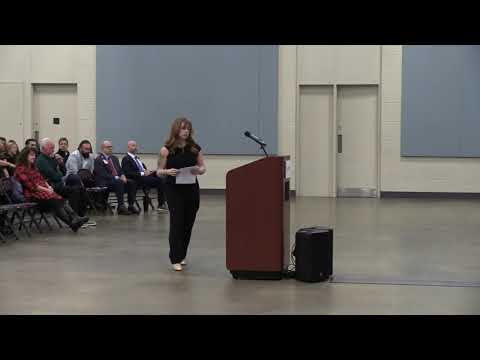
Several residents and regional environmental advocates urged Lee County commissioners to reinstate a two-year moratorium on hydraulic fracturing and exploratory drilling during the public-comment portion of the meeting.
Debbie Hall, who lives about a mile from the site in question, said Butler No. 3 sits roughly one-tenth of a mile from the Deep River and that the river supplies water for tens of thousands of people in Lee and neighboring counties. "It has the potential to release harmful chemicals into our river," Hall said, and asked the board to "say no to this right now" by enacting a moratorium.
Stephanie Stevens, the Deep Riverkeeper licensed by Waterkeeper Alliance, urged commissioners to act now rather than later to avoid permitting polluting industries that may accompany gas extraction or nearby data centers. Stevens cited emerging concerns about PFAS in data-center wastewater and noted the Deep River already has documented synthetic chemical contamination. She requested a two-year pause while the county evaluates environmental risk and regulatory capacity.
Other speakers noted historical context: Keely Porich recounted previous county moratoria and weak exploratory yields in earlier drilling attempts, and cited limited staffing and technical capacity at the North Carolina Department of Environmental Quality to review new rules. Donna Strickland and email correspondents urged greater protection for new homeowners and asked how the county would educate residents about historic wells and coal-mining incidents.
County staff acknowledged prior local moratoria and said the commission could review ordinance language and consider additional protections. Commissioners did not take immediate action on a moratorium at the meeting; the topic is expected to be considered in subsequent agenda items or follow-up meetings.
What’s next: Commissioners indicated willingness to review the solid-waste and related ordinance language and to consider community requests; no moratorium vote or ordinance change was made at the meeting.