Get Full Government Meeting Transcripts, Videos, & Alerts Forever!
Get email alerts on the Ems Franchise topic
No spam. Unsubscribe anytime.
Lee County public hearing draws sharp debate over EMS franchise as advisory panel backs First Health
Summary
Dozens of residents, current paramedics and local fire chiefs urged commissioners to prioritize clinical capability and continuity over a lower bid from MedEx; the EMS advisory committee unanimously recommended renewing First Health, and the board set a Dec. 19 work session to revisit the contract decision.
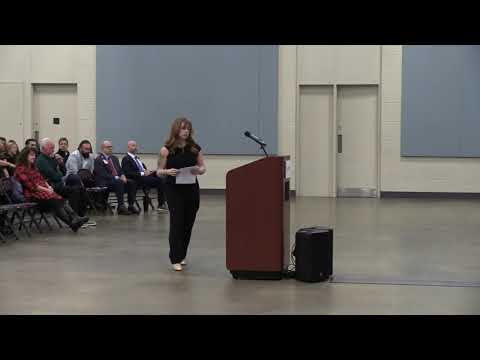
The Lee County Board of Commissioners heard more than two hours of public testimony on a proposed change in the county’s emergency medical services franchise, with community members, current paramedics and volunteer fire chiefs sharply divided over whether to replace incumbent First Health with bidder MedEx.
The county’s EMS advisory committee, represented at the hearing by Jessica Miller, told the board it had reviewed each vendor’s responses to the county’s RFA, attended in-person vendor presentations, submitted follow-up questions and based its recommendation on the standards in the RFA. "Our role was to recommend the RFA requirements," Miller said, and the committee made a unanimous recommendation for First Health after its review.
That recommendation framed much of the public testimony. Several current and former First Health paramedics described clinical and cultural differences they say matter in emergency care. Natalie Vaughn, a senior paramedic with First Health, urged commissioners to "weigh not only the numbers on a proposal sheet, but the proven track record, clinical capability, and ethical foundation of the organization you entrust with your community's emergencies." She said equipment alone cannot replace workforce culture and continuity.
Volunteer fire chiefs and local first responders raised operational concerns about MedEx’s proposal, saying it had not consulted fire departments about housing ambulances. Robbie Wilkins, chief of the Carolina Trace Fire Department, told the board that MedEx’s bid included options that would station apparatus in remote parts of the county during peak hours and remove them during non-peak hours — a plan he said could leave communities exposed overnight. Wilkins and others said they had not been approached about rental or housing arrangements for apparatus in their stations.
Supporters of MedEx, including the company’s owner Donna Hertel and consultant Richard Rutherford, countered that the company conducts in-house training, holds multiple county contracts, and planned to offer competitive pay and benefits. Hertel described MedEx as "the largest private ambulance provider in the state" and said the company had prepared its bid with consultant-reviewed market assumptions. MedEx representatives said they expected to recruit existing local EMS staff and to invest in training and accreditation.
The financial gap between bids drew repeated questioning from commissioners. First Health described its 2025 operating cost to run the program at about $6.16 million (salary and benefits as principal components) and explained options to spread increased costs over the contract term. Public speakers cited figures ranging from a $12 million difference up to claims from vendors that the incumbent’s bid this cycle was substantially larger than previous contracts; MedEx representatives said market research justified their lower number and promised wage floors that would meet or exceed current pay.
Commissioners used the vendor presentations to press both companies on specific operational items: number of ALS units per shift, the percentage of emergency (ALS) calls versus non-emergency work, dispatch and lights-and-sirens rules, whether MedEx had the sole-provider 9-1-1 experience some commissioners expected, and how lease and base-location costs were included in MedEx’s budget. First Health officials pointed to historic response-time metrics (they cited an average of 7.55 minutes on a goal of 9 minutes) and a claim of more than 29,000 calls handled under their contract.
Many public commenters emphasized the potential human cost of a switch. "You do not figure out EMS," said Drew Womble, a resident who urged commissioners to "choose experience over a gamble." Other speakers, including longtime volunteers, described First Health's integration with local first responders and cautioned that promises to house ambulances in volunteer stations had not been confirmed.
MedEx representatives repeatedly rejected characterizations of their organization as a transport-only company and denied any intent to steer patients to a particular hospital. They said franchise rules would require adherence to dispatch protocols and that the county’s 9-1-1 dispatch would continue to determine responses.
After the vendor presentations and public comment, the board closed the public hearing. In light of the volume of testimony and the technical questions raised, Commissioner Reeves moved that the board hold a work session to revisit the EMS service contracts; the board voted to schedule that session for Dec. 19 and invited the EMS advisory committee to participate. No final contract award or formal vote occurred at the meeting.
What’s next: commissioners will use the December work session for deeper review of contracts, staffing assumptions, lease/ facility cost estimates and any proposed protections for county employees or continuity of care. The advisory committee and vendor representatives will be asked to provide additional documentation on staffing, pay and benefits, base locations and enforcement mechanisms outlined in the RFA.