Get Full Government Meeting Transcripts, Videos, & Alerts Forever!
Get email alerts on the Special Education Consortium topic
No spam. Unsubscribe anytime.
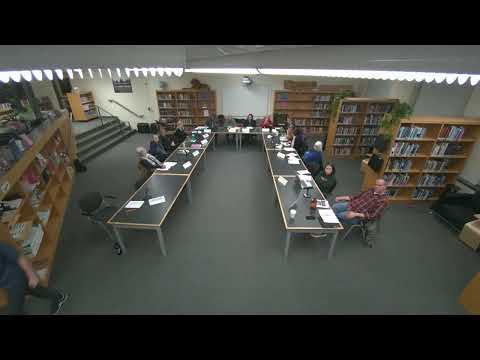
Merrimack Valley Board hears special‑education consortium plan, votes to delay decision until May
Summary
The board reviewed a nonbinding memorandum of agreement to join a Lakes Region special‑education consortium and, after questions about models, costs and community input, voted to postpone a decision to the May meeting.
The Merrimack Valley School Board on Monday reviewed a nonbinding memorandum of agreement to explore joining a Lakes Region special‑education consortium but voted to postpone any decision until its May meeting to allow more community input and follow‑up. Administration described the agreement as a planning step tied to a congressional‑directed funding application and said signing the MOA would create no immediate financial obligation.
Administration told the board the Lakes Region superintendents have discussed a potential shared model to serve pre‑K through eighth‑grade students with specialized needs. The district has put its name forward for consideration in a grant application for $1,300,000; if awarded, officials said the first phase would fund planning and an executive director to design service models. Presenter Julie (surname not given) summarized placement priorities under the Individuals with Disabilities Education Act (IDEA), emphasizing a continuum of placements and the district’s commitment to family‑based, free appropriate public education (FAPE).
Board members pressed for details about governance, which districts would participate, timing and whether Andover students would have access. Administration emphasized the MOA is a nonbinding statement of intent: "This is just saying, yes. We're into this. If we get the funding, great. If we don't, this is still going to happen, but it might be a couple of years out," an administrator said. The presentation included illustrative cost numbers; the transcript records transportation at about $65,000 and paraprofessional support at about $48,000 for one example, and a tuition figure recorded as "dollars 104" (the record does not clarify whether that denotes $104,000 or a different unit).
A board member moved to delay action until May to allow the public and families time to provide feedback and to have outstanding questions—about program models, adequacy funding implications and participating districts—answered. The motion was seconded and passed by voice vote. Administration said it will provide incremental reports of consortium meetings and that any move beyond planning would come back to the board for a formal vote with full financial details.
What happens next: if the federal grant is awarded, the district expects to participate in planning and hire an executive director to develop operating models; any funding decisions or commitments would be subject to later board approval.