
Commission weighs subdivision/regulation updates, a proposed 25% fee increase and 15% inclusionary requirement for multifamily projects
Get AI-powered insights, summaries, and transcripts
Subscribe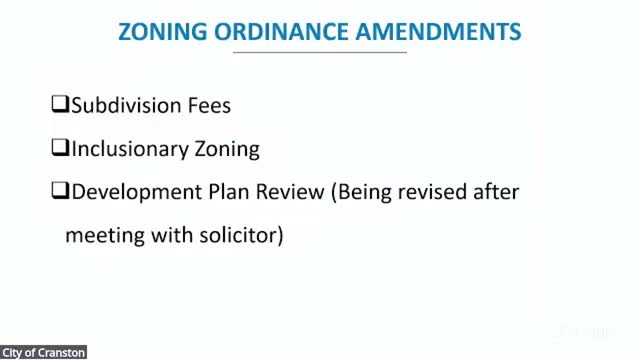
Summary
Planning staff outlined subdivision regulation updates reflecting 2025 state law and proposed zoning changes including a 25% fee increase and a 15% inclusionary housing requirement for multifamily developments of 10+ units; commissioners sought legal and administrative clarification and public input.
Planning staff presented proposed revisions to subdivision regulations and three major zoning ordinance topics: fees, inclusionary zoning and development plan review (DPR) integration.
Staff said the bulk of regulatory changes respond to 2025 legislation from the Rhode Island General Assembly, including reclassification of oversized lot subdivisions, making pre‑application meetings optional, moving certain state permit timing to final plan review, and extending the expiration on final plan approvals to two years (with existing one‑year extension options maintained).
On fees, staff noted the planning department fees have not increased since 2007 while the department budget has grown. The director and chair suggested a 25% fee increase as defensible; commissioners discussed statutory authority under R.I. Gen. Laws §45‑23‑58, the difference between flat and per‑unit fees, and whether unified development fees or zoning fees require council action. Commissioner Coop and others asked staff to document actual review costs to justify changes under the statute.
The commission also reviewed a draft inclusionary zoning ordinance that would require multifamily projects of 10 or more units to include at least 15% deed‑restricted low/moderate income units, consistent with the 2025 amendments to the Low and Moderate Income Act. The draft includes incentives such as density bonuses; commissioners debated rounding rules for small projects, waiver criteria for projects with extraordinary costs, and whether approved but not yet constructed units count toward the 10% municipal threshold for exemptions from comprehensive permit provisions.
A resident commenter urged a broader, geographically equitable approach to inclusionary zoning, warning that limiting requirements to multifamily projects could concentrate benefits unevenly across the city. Staff said additional outreach and legal review will continue and public hearings are planned; the commission voted to continue comprehensive plan proceedings and to schedule hearings on the draft regulations.