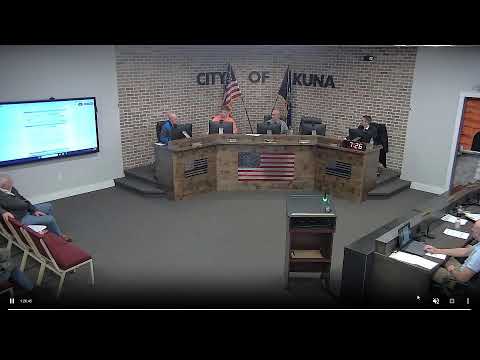
Kuna staff summarizes fiscal‑25 finances; city reports about $103 million cash across funds
Loading...
Summary
Finance staff presented a fiscal‑25 recap explaining accounting bases (cash, modified accrual, GASB, GAAP), reported roughly $103 million in cash across funds, discussed Water East/Sewer East fund results and said roughly 400 KeyBank EDUs remain outstanding and are projected to be extinguished in Q1 next year.
City finance staff provided a detailed recap of fiscal year 2025 financials and explained how to interpret multiple accounting bases used for government reporting and budgeting.
Jared Impey outlined several accounting methods: cash basis (simple but not appropriate for government budgeting), modified accrual (used by the city for budget setting), GASB variants (which separate governmental and enterprise funds and exclude some donated infrastructure), and GAAP (useful for long‑term planning). He told council the total fund cash balance, including the Urban Renewal Agency, was about $103,000,000 at the end of fiscal 2025.
Impey highlighted differences among bases when reviewing individual funds: for example, the water and sewer funds show materially different change‑in‑fund‑balance numbers depending on whether capital projects or donated infrastructure are included. He said the newly established Water East and Sewer East funds appear large on GASB statements because donated infrastructure is included, but when donated infrastructure and depreciation are factored in those funds are roughly breaking even.
On specific items, Impey said laboratory costs in the water fund were elevated due to a three‑year reporting requirement and that professional services rose where the city used outside engineering. Regarding a prior KeyBank agreement, he said the city had about 400 EDUs remaining to fulfill (down from over 4,000) and projected extinguishing that obligation in Q1 of the coming year.
Councilors noted the differences in accounting methods complicate cross‑city comparisons and suggested following up with the state comptroller for broader context.