Feasibility Study: Cache County Can Support New Indoor Recreation Facilities, Consultants Say
Summary
Consultants told the county council that demographic and survey analysis supports at least two indoor recreation centers; three distribution/funding options were presented (countywide center, two districts, or three districts), with next steps including operational analysis, conceptual designs and a statistically valid voter survey.
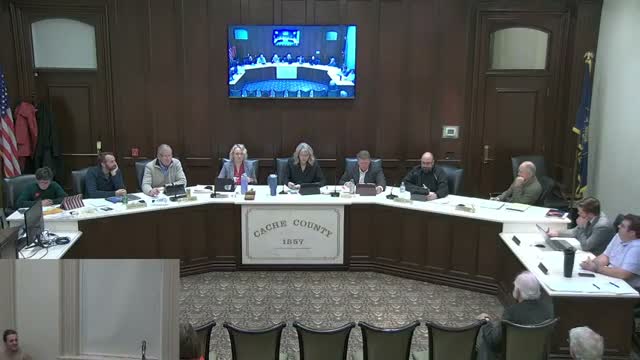
Consultants presenting a feasibility study to the Cache County Council said the county has market demand and community support to justify new indoor recreation facilities, but funding structure and geography will determine cost and access.
Whitney (consultant) and Nathan Levitt (VCPU Architecture) presented a market analysis and a countywide survey that prioritized aquatics, indoor courts, fitness spaces and family-focused programming. Whitney said the analysis indicated the county's population—approximately 110,000 in the consultant materials—is sufficient to support two to three recreation centers and that indoor amenities are in higher demand in Cache County because of longer winters. "We found that there's a population size that's absolutely adequate to support multiple indoor recreation facilities," the presentation said.
The study laid out three options: - Option 1: a single countywide central facility (economies of scale; county-run), which lowers construction and operating duplication but increases travel time for residents outside the core; - Option 2: two recreation districts (north and south) with two facilities to reduce drive times and distribute access while increasing operational costs; - Option 3: three districts splitting Logan into its own district to avoid splitting Logan's population, increasing distribution but raising construction and operating costs.
Consultants reported a mean household willingness to pay of about $15 per month in the community survey and flagged aquatics as an expensive operational cost to sustain. They recommended a baseline community recreation center of roughly 40,000 square feet, expandable to 60–70,000 sq ft for aquatics and specialty components. Staffing estimates for a single large facility projected at least five full‑time staff plus many part‑time positions; operational analyses and 20‑25 year cost models were proposed as the next step.
Council members asked for comparative operational audits of similar facilities, 20‑ to 25‑year cost projections (including maintenance and replacement), phased construction scenarios (court-first, pool later), and clarity on governance models (county-run vs. special recreation districts). Consultants said: if a county bond were pursued, it could be on the 2026 ballot; formation of recreation districts and district-level bonds would likely require additional time and could push financing to 2027 and construction later.
Next steps identified by the consultants: select a preferred alternative, prepare operational and life-cycle cost analyses, develop architectural concepts and site studies, and run a statistically valid voter survey to test ballot support before any bond is placed.