Get Full Government Meeting Transcripts, Videos, & Alerts Forever!
Get email alerts on the Stormwater Veterans Home topic
No spam. Unsubscribe anytime.
Gallatin council debates three stormwater fixes for American Legion veterans home; sends item back for more analysis
Summary
City staff presented three constrained options to fix chronic flooding at the American Legion veterans residence — extend Hill/Hale Avenue (removing Woods Ferry Road), build a ~100‑foot detention pond on Liberty Baptist Church land, or return $500,000 in ARPA funds — and council agreed to revisit the item at a Dec. 9 work session after asking for more numbers and design detail.
City staff told the Gallatin City Council that only three practicable options remain to address repeated flooding at the American Legion veterans residence and nearby neighborhoods, and urged the council to give staff direction or return federal ARPA funds.
"The only cost‑effective plausible alternative that can be constructed within the time constraints to utilize the ARPA funds…is a new detention pond on the south edge of the Liberty Baptist Church property," Mr. Tuttle, the city presenter, said during the special‑called committee meeting. He added that the church had indicated willingness only for a much narrower footprint (roughly 35–50 feet) and that achieving the needed detention without taking private land would be difficult.
The three options Tuttle outlined were: proceed with the previously designed Hill/Hale Avenue extension (which would remove Woods Ferry Road and expand the Bell/Bales detention pond), construct a roughly 100‑foot wide pond on a portion of the Liberty Baptist Church parcel immediately north of the veterans home, or return the $500,000 allocated by Sumner County and seek a different solution. Tuttle emphasized the project is tied to federal funds with timing and reporting deadlines and warned delays raise costs and procurement risk.
During a lengthy question‑and‑answer period, council members and residents pressed engineers on whether expanding the existing Bell/Bales pond would change the outflow and whether the pond currently overflows. Staff answered that smaller, narrower ponds studied (35–50 foot footprints) would likely require much deeper excavation, hit bedrock in places and become prohibitively expensive or unsafe without retaining walls; they also explained that detention is about holding and controlling flows during less frequent, larger storms, not the small events residents often notice.
Council members cited public‑safety objections raised by police and fire officials to removing Woods Ferry Road because rerouting first responders could add significant travel time into the neighborhood. Tuttle said two of the alternatives could require condemnation of a small parcel (he described it as roughly three‑tenths of an acre) to accomplish the needed detention if voluntary access cannot be negotiated.
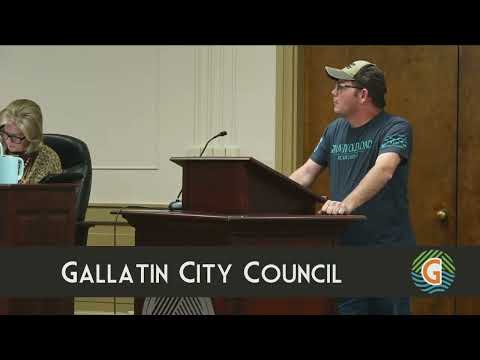
A member of the public, Chris Shoemaker — who identified himself as a seven‑year U.S. Army veteran and said the Legion has paid about $11,371 in stormwater fees since the utility began — asked the council to consider a refund of past fees to fund remediation on the veterans home property coordinated with the city and the church. Shoemaker also asked whether a single‑lane emergency access might preserve first‑responder access while allowing additional detention; staff said that would require engineering analysis and could not be confirmed without design work.
The council did not approve a final design or immediate condemnation. After debate over risks, costs and timing, a councilmember moved to return the stormwater item to the Dec. 9 work session for additional modeling and to provide the specific numbers for the different pond footprints; the motion passed with four in favor and one opposed. Several council members warned that if the city cannot secure the needed property or negotiate constructible alternatives, returning the ARPA dollars to the county could become the only option.
Next steps: staff will provide comparative flow numbers for the 50‑foot vs. 100‑foot pond footprints, further analysis of construction costs and timing, and a clearer estimate of first‑responder access impacts for the Dec. 9 work session. The city also noted the ARPA reporting and construction invoices must be completed within the federal/state reporting window, and staff said delays will likely increase project cost and procurement complexity.