Get Full Government Meeting Transcripts, Videos, & Alerts Forever!
Get email alerts on the Tax Increment Financing topic
No spam. Unsubscribe anytime.
Billings council debates TIF agreements, management fees and one‑year renewal option
Summary
Councilors and staff debated replacement TIF agreements for three urban renewal districts, focusing on whether to use one‑year terms with renewal options, whether management fees should be fixed in contracts or set in annual budgets, and concerns that administration costs across districts exceed $700,000.
Billings — City staff presented replacement agreements intended to formalize how three urban renewal (TIF) districts operate under new state laws, and councilors spent the work session probing contract length, fee language and oversight.
The staff memo said the agreements replace expiring MOUs and generally mirror current practice while aligning with state law. Gina, who introduced the item, noted the first agreement term appears prorated (Nov. 1 to June 30) to align contracts with the city’s fiscal year and budget cycle.
Why it matters: Tax increment financing districts capture future tax growth to fund projects across jurisdictions. Council members and residents warned that long multi‑year contractual guarantees and high administrative costs risk locking the city into payments that limit flexibility during tight budget cycles.
Contract length and renewal: Council member Kennedy proposed changing the contracts to one‑year terms with options to extend for years two and three, giving the council an annual review point. “I would like to see a change in that term to say the agreement shall be in effect … until 06/30/2026, and then an option for year 2 and an option for year 3,” Kennedy said. Several councilors and staff agreed to align the renewal/notice period with the budget cycle and discussed 30–60 day notice windows tied to budget adoption.
Management fees and oversight: Councilor Raslar raised detailed concerns about administrative costs and management fees, citing figures provided by staff: Downtown TIF gross increment approximately $2,850,000; Ebert (East) about $890,000; South TIF about $5,500,000. He argued the percentage taken for management fees is high for some districts and urged the council to consider consolidated management to reduce duplicated soft costs.
Responses from TIF partners: Katie Schreiner, representing Downtown Billings, defended the district’s broader role — developer outreach, marketing, and project facilitation — and said the office anticipates presenting annual budgets and work plans regardless of whether the contract is one year or multi‑year. Katie said downtown sees an average of 25 new businesses annually and that the partnership plays a key role in shepherding projects from interest to construction.
Legal and labor issues: Councilor Kennedy asked whether the Davis‑Bacon prevailing wage requirements apply. Staff clarified the federal Davis‑Bacon Act applies only when federal funds are used; the state ‘Little Davis Bacon’ (prevailing wage) language can apply under Montana law and is typically included in development agreements where relevant.
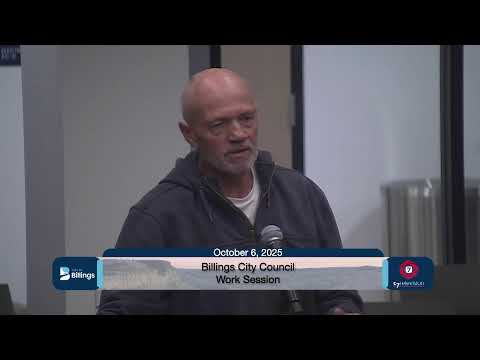
Public comment and criticism: Resident Kevin Nelson criticized the overall approach, calling $700,000 in administrative costs “terrible” and suggesting consolidation and narrower administrative scope: “I think it's time to condense this and consolidate it into one body that has one goal, and that is just administer the TIF districts,” he said.
Next steps: Council directed staff to revise the draft agreements to (a) align contract terms with the fiscal year so the first term is prorated to end June 30, (b) consider one‑year agreements with options to renew, (c) clarify renewal/notice mechanics (60 days was suggested), (d) consider removing fixed fee tables from the contracts and rely on the annual budget for amounts, and (e) refine recital language to better reflect that partners implement the urban renewal plans—not only administer grants. Staff (Gina/Andy) and representatives will return with revised language for council review.
Reporting note: No formal votes were taken during the work session; the discussion provided policy direction to staff and solicited additional public input.