
Salinas launches multi-phase zoning code update, staff seeks input on advisory committee
Get AI-powered insights, summaries, and transcripts
Subscribe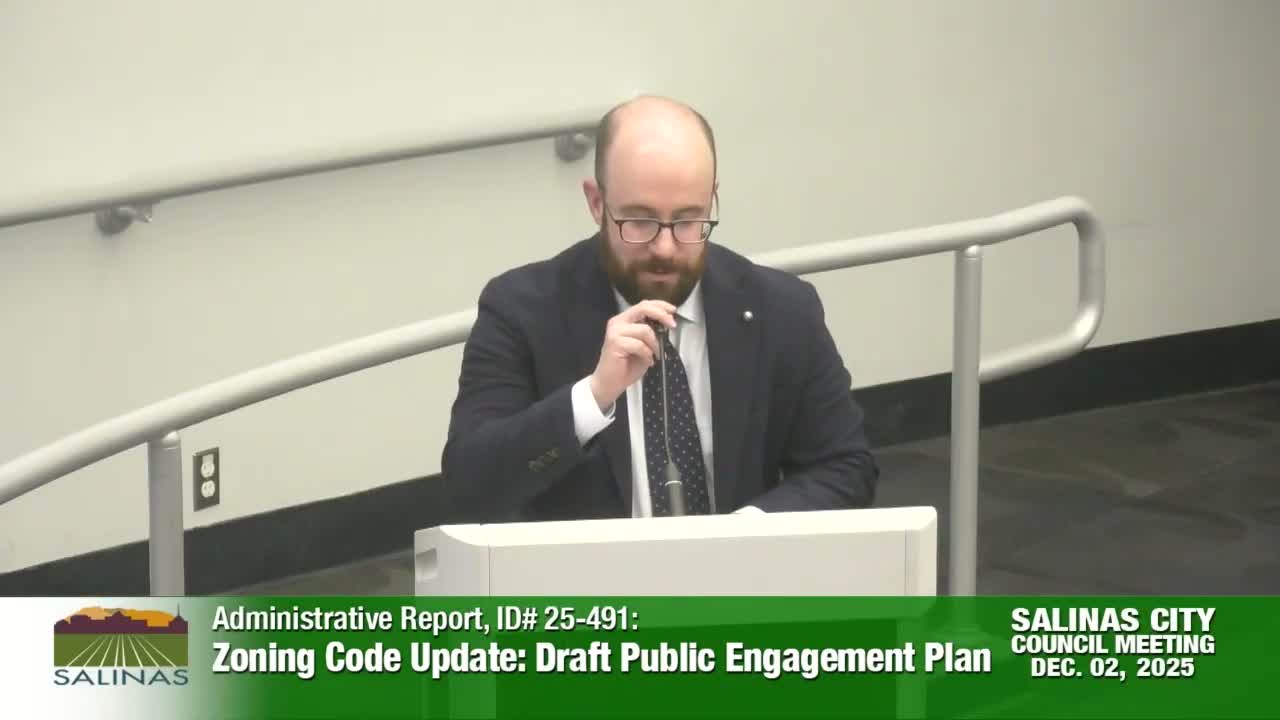
Summary
City staff presented a multi-phase zoning code update to align the municipal code with state housing law, proposing a technical advisory committee and broad public outreach including virtual workshops and in-person pop-ups.
City staff outlined a multi-phase zoning code update on Dec. 2, describing it as the first comprehensive rewrite in nearly two decades. Jonathan Moore, presenting the engagement framework developed with consultant PlaceWorks, said Phase 1 will focus on bringing the existing zoning code into compliance with state housing law and the 6th-cycle housing element adopted in 2023, addressing accessory dwelling units, approval standards, definitions and design standards.
Moore and the consultant described three phases: near-term compliance updates (phase 1) expected to wrap in 2026; phase 2 to align the code with the forthcoming general plan once adopted later in 2026; and phase 3 to create a whole new code by 2027. Moore proposed a technical advisory committee (TAC) of roughly 15 technical users to vet detailed provisions, while the planning commission would be the primary public advisory body for formal recommendations to council.
Councilmembers asked whether TAC meetings would be public or videotaped. Staff said TAC sessions are intended to be technical and not Brown Act committees, but the planning commission hearings and formal reviews will be public and are the primary forum for public review. Staff committed to quarterly updates to council, a public call for TAC participation, and multiple engagement pathways including evening and Saturday events, pop-up meetings across neighborhoods and targeted outreach to seniors and persons with hearing or visual impairments.
Councilmembers emphasized balancing technical expertise with everyday residents' participation; staff agreed to consider dedicated seats for nontechnical residents on the TAC and to publicly post selection criteria and an application process. PlaceWorks will present to the planning commission in a forthcoming meeting as an early visioning step.