City amends CIP ranking weights, adopts uniform evaluation policy
Loading...
Summary
Council adopted a uniform Capital Improvement Plan ranking policy after approving an amendment to reduce community/economic impact weight and increase asset‑condition and funding feasibility weights; staff will apply committee scoring and present tiered project lists for budget planning.
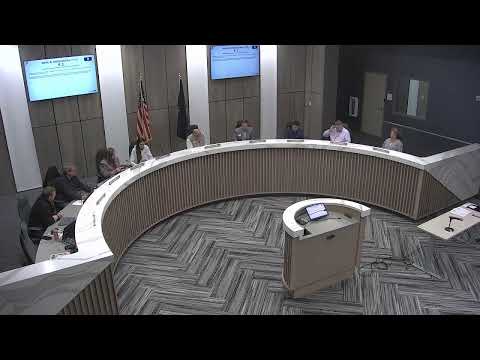
The City Council on Dec. 1 approved a revised Capital Improvement Plan (CIP) ranking and evaluation policy that replaces department-specific scoring with a citywide, committee‑based framework.
City engineer Lance explained the new process: each project will be scored 0–10 across weighted categories — public safety, asset condition, funding feasibility, strategic alignment and others — and projects will be placed into Tier 1 (80 and above), Tier 2, or Tier 3 (below 60) for budget consideration. The committee will evaluate projects rather than relying on individual department rankings.
During discussion Alderman Blessum moved an amendment to reduce the community and economic impact category from 20 to 10 points and reallocate those 10 points to raise asset condition and funding feasibility scores; the amendment was seconded and passed by roll call. Council then adopted the full policy as amended.
Why it matters: The policy standardizes how the city prioritizes competing capital projects across departments and is intended to improve transparency and align projects with public‑safety and funding feasibility priorities.
What’s next: City staff will apply the new scoring for next year’s CIP, present a prioritized list to council in workshop format, and hold public hearings as part of the budget process.