
Commission hears pitches from Fortress and Hedera on stablecoins, consumer protections and state options
Get AI-powered insights, summaries, and transcripts
Subscribe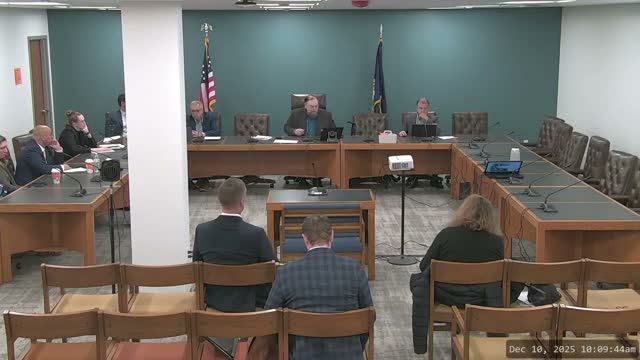
Summary
Presenters from Fortress Global and the Hedera Foundation told New Hampshire’s commission stablecoins can speed payments and enable new state services — but commissioners and consumer‑protection officials pressed for clear policies on custody, fraud recovery and who benefits financially. The panel approved minutes and set the next meeting for Jan. 14.
The Commission to Study (stable tokens and real asset tokenization, blockchain‑based trust) on Wednesday heard two hour‑long presentations about stablecoins and tokenization and then questioned presenters about consumer protections, recovery procedures and how a state might capture revenue if it uses or issues stable tokens.
Noah Herman, chief strategy officer at Fortress Global, framed stablecoins as a tool to move dollars on digital rails with lower cost and higher speed than traditional payment systems. "Stablecoins represent, a an asset that can still operate on a protocol, but it doesn't suffer from that volatility," Herman said, summarizing why treasurers and large corporates are testing the technology. He described custody options — qualified custody through regulated custodians, managed custody and self‑custody — and urged state offices to consider how token operations would integrate with existing ERP systems so treasurers can "see all of my dollars" in one place.
Herman said states face choices ranging from simply partnering with an existing issuer ("go to Circle or Tether and mint a dollar") to taking a long path toward a state‑issued token like Wyoming's model. He warned of tradeoffs: ease and low technical burden for a partner‑based approach versus retained interest income and longer implementation time for a state‑issued model. He also pointed to examples of ring‑fenced tokenization projects designed to keep economic activity within a state's boundaries.
The commission then turned to the Hedera Foundation. Greg Bell, Hedera's chief business officer, described Hedera as "a foundational technology" with a permissioned node model run by major corporations and institutions. Hedera representatives highlighted asset controls — the ability for issuers to freeze, burn or reissue tokens — and touted sub‑3‑second finality as an operational benefit for payments and microtransactions. John Kiko, director of business development, said the network supports standardized token issuance and custody through integrated tooling and qualified custodians.
Hedera speakers outlined use cases for states, from tokenized municipal bonds and trackable environmental credits to targeted digital stimulus and state‑issued identity. "If the state decides to provide surgical targeted stimulus to citizens,... You can use Stable Tokens to send it directly to the citizens' wallets," Kiko said, adding that participating merchants would need on‑boarded wallets to accept those tokens.
Consumer advocates and commissioners pressed both presenters on fraud, scams and recovery. Brandon Garad, chief of the Consumer Protection Bureau at the New Hampshire Department of Justice, warned that instant tokenization and cross‑border transfers could create "an enormous opportunity for fraud" and asked what protections exist beyond disclosures. Fortress pointed to multi‑approval signing and internal governance controls as a way to prevent operator error. Hedera explained elective issuer controls that can allow freezing and reissuance of stolen or misdirected funds, saying there is technically "no time limit" to act because movements are recorded on chain — but recovery is easier if assets remain on the issuing network and harder once tokens quickly bridge to permissionless chains.
Presenters also addressed bank‑system impacts raised by the New Hampshire Bankers Association: Jim Kish said the state's deposit base is a channel for local reinvestment and asked whether stablecoin rails risk concentrating funds at money‑center banks. Herman pointed to state tokenization engines and ring‑fencing mechanisms that aim to keep economic value and tax revenue within a state when that is an objective.
Commission business: a motion to approve the Nov. 12 minutes was made by Jim Tisch and seconded; the commission approved the minutes with no recorded opposition and noted online members Andy and Dan indicated support. The commission set the next meeting for Jan. 14 at 10 a.m. and said future sessions will include presentations from custodians (PitGo and Anchorage Digital) and outreach to the treasurer's and revenue offices. The chair also invited submissions from speakers with skeptical or alternate viewpoints for future meetings.
What happens next: presenters provided slide decks and technical resources for the commission portal; commissioners signaled interest in hearing agencies with fiscal oversight and consumer‑protection responsibilities before making formal recommendations. The commission did not adopt policy at this meeting; presenters emphasized that many protections and recovery mechanisms are elective design choices for token issuers and would need codification in any state approach.
Votes at a glance: the only recorded formal action in this transcript excerpt was approval of the Nov. 12 minutes (motion moved by Jim Tisch; second recorded; outcome: approved). The commission scheduled its next meeting for Jan. 14, 10 a.m.
The commission adjourned after closing administrative items.