Get Full Government Meeting Transcripts, Videos, & Alerts Forever!
Get email alerts on the Pretrial Evidence topic
No spam. Unsubscribe anytime.
Pretrial motions in O'Donnell case probe evidence and alleged gambling link
Summary
Defense in the Thomas O'Donnell matter moved to exclude luminescent chemical tests and firearms evidence; prosecution argued relevance, discussed two firearms and a gambling-related theory tied to the victim's cash, and the court reserved some rulings while directing production of a geolocation expert report.
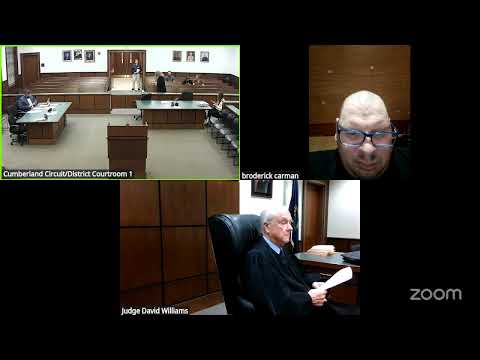
At a Cumberland County docket session, pretrial counsel in a case involving Thomas O'Donnell presented a set of motions to exclude multiple categories of evidence and pressed the court on timing for expert reports.
Defense counsel asked the court to exclude portions of evidence recovered from a Toyota Tundra (luminescent areas that were swabbed and tested and reportedly did not contain blood) and an itemized paper towel that presumptively tested positive for blood but produced a male DNA profile that did not match the defendant or other persons linked to the case. The defense argued that luminescence results and particular forensic items are irrelevant or prejudicial. The court overruled exclusion of some items, finding lack of prejudice in areas noted on the record.
Counsel also raised firearms evidence: a .308 rifle recovered months after the alleged offense and a .45‑caliber pistol with prior ownership ties to a person named Michael Harding; prosecution described a theory that the pistol may have been transferred by a third party and suggested a potential motive connected to alleged gambling activity. Defense opposed speculative inferences about gambling; the court required foundation to establish relevance on any gambling theory.
Separately, counsel expressed concern about the Commonwealth’s geolocation expert report prepared by Elizabeth Wheeler, identified on the record as an FBI agent. The court recorded an expectation that the report be produced and peer-reviewed before distribution; the Commonwealth said it expected the report by December and the court said that if the report is not available, counsel may return to seek relief.
Why it matters: The admissibility of forensic tests, DNA profiles and firearms-related evidence will shape the prosecution's narrative and the defense's ability to counter in trial. The timeline for the expert geolocation report affects pretrial preparation schedules.
What’s next: The court addressed motions on the record, made several evidentiary rulings, and set expectations for production of the geolocation report; counsel were told to coordinate any remaining motions and the court emphasized efficiency in scheduling further limited hearings rather than frequent piecemeal filings.