Get Full Government Meeting Transcripts, Videos, & Alerts Forever!
Get email alerts on the Probation And Treatment topic
No spam. Unsubscribe anytime.
Cumberland County judge refers probationers to drug court, orders sanctions in multiple cases
Summary
In a docket session, the Cumberland County Circuit Court referred James Hurst to drug court instead of immediate revocation and issued sanctions or revocations in several probation cases; negotiation and next-court dates for arraignments were commonly set for Dec. 12 and Dec. 18.
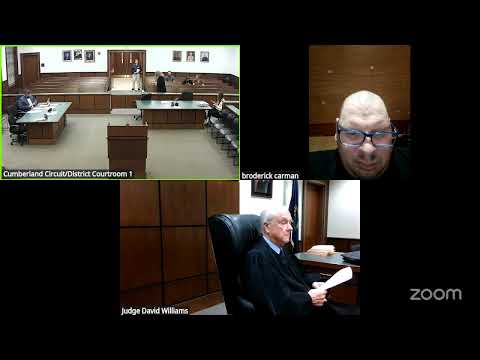
A Cumberland County Circuit Court session that handled a mix of arraignments, probation revocations and pretrial motions on an unspecified date resulted in at least one defendant being sent to drug court and several probation-related sanctions and revocations.
James Hurst, identified on the record, appeared on probation-revocation dockets in two files. Defense counsel said Hurst had entered a long-term treatment program (ARC), progressed to phase 3, and left the program after a disagreement over treatment. Counsel asked the court for one more chance, proposing shock probation or placement in drug court so Hurst could care for his elderly father. The court agreed to refer Hurst to drug court and ordered assessments and coordination for transfer rather than immediate incarceration, telling the defendant, “We're gonna send you to drug court.”
The court handled multiple similar probation matters: Melody Connor had probation revoked and the court directed her to rehabilitation or in‑custody sanctioning with consideration for shock probation eligibility; Christopher Toole (21CR0083) had probation revoked after confirmed positive meth tests and the court said Toole would be reviewed for possible in‑house treatment only after a period of custody; Scotty Lake and several defendants with out‑of‑state supervision discussed transfer and shock‑probation logistics, with the judge explaining that state-to-state supervision transfers require formal acceptance by the receiving state before a defendant can be released under supervision.
Common procedural steps were repeated across cases: the court signed reciprocal discovery orders, set negotiation days commonly for Dec. 12 and next court dates for Dec. 18, and in several probation matters the court emphasized that defendants must meet with probation officers and follow treatment plans to remain eligible for alternatives to incarceration.
Why it matters: Probation revocations and referrals to treatment courts determine whether defendants remain in community-based supervision or return to incarceration, and the court’s choices shape access to treatment, family impacts and scheduling for future proceedings.
What’s next: Where the court ordered drug‑court referral or shock probation review, staff were directed to coordinate assessments and transfer paperwork; specific timing depends on program availability and any interstate supervision approvals.