Get Full Government Meeting Transcripts, Videos, & Alerts Forever!
Get email alerts on the Municipal Budget topic
No spam. Unsubscribe anytime.
Council holds public hearing on proposed 2026 budget as water, sewer and street projects move forward
Summary
Council opened a public hearing on the recommended 2026 budget, hearing presentations from sewer, water and public-works staff about capital needs including UV disinfection replacement, a PennVest application, a planned solar field and a citywide meter upgrade; council scheduled further ordinance readings on millage and approved related consent items.
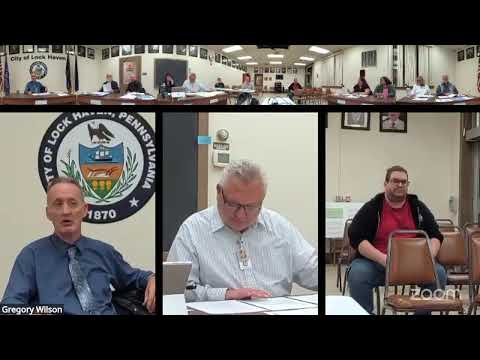
Lock Havens City Council opened a public hearing Nov. 17 on the proposed 2026 budget and heard detailed presentations from public-works and utilities staff on planned capital work and operating changes.
City staff described the Sewer Funds highest-priority capital expense: the citys ultraviolet disinfection system for treated effluent is aging and parts are no longer available. Staff said the city will apply to PennVest (packet spelled "Penvast") in the spring to fund replacement work and that partner municipalities that use the treatment plant will pay a proportional share of the project cost. "We will be going in the spring for that application," a staff presenter said, adding the sewer capital project fund carries enough balance to pay interim bills until PennVest reimbursement occurs.
Public-works leaders reviewed operations and new asset-management tools. Jared Gist, superintendent of general fund public works, described a recently purchased pavement- and asset-management platform (referred to in the packet as Bioletics) that links CCTV sewer-video, GIS layers and work orders so staff can show condition evidence when proposing paving projects. "Once we can overlap it, then when we come to council and say, okay, this year we want to pave these streets, we can show the assessment from the asphalt and the camera video of the sewer line thats cracked," Gist said.
Staff also told council about a planned solar field intended primarily to offset wastewater-plant energy costs. The presentation cited a long-term solar rate of about $0.055 per kilowatt-hour under the contract, which staff said is lower than current utility rates and will produce savings beginning in 2026.
On the water side, the council heard from Hunter Stover, who described a program to replace more than two dozen aging customer meters and install radio reads and system-wide leak detection. Staff said older meters (some more than 20 years old) underreport usage and that replacing them will not reduce consumption but will convert previously unbilled use into billed, accounted-for revenue. Staff said initial meter readings after installation will show the magnitude of recovered revenue.
Councilors pressed staff on several line items during the hearing: an apparent spike in legal expenses that staff said reflects a three-year average including years with litigation; an approximate 2% increase in insurance premiums that has been included as an estimate across departmental budgets; and why some equipment-maintenance lines rose, which staff attributed to three-year averaging of prior years costs. A township representative during public comment urged more permanent road repairs at several township sites; staff responded that the city has assigned those locations to a spring permanent-patching project.
The hearing also included a first reading of a split-rate millage ordinance that would change how the real-estate millage is applied to land and improvements and staff said the ordinance will be revisited at subsequent meetings. Councilors scheduled additional discussion and votes on the millage and other budget ordinances at upcoming meetings.
The hearing closed after staff answered member questions; councilors continued with consent agenda items and several routine approvals later in the meeting.