Regional wastewater authority details cost‑allocation changes and rerating study that could avoid a $200M expansion
Loading...
Summary
Upper Occoquan Service Authority staff told the Manassas Park council the authority’s cost‑allocation study recommends separating septic charges, smoothing reserve maintenance costs, and implementing a capacity‑loaning system; a rerating study identified $50–60 million of projects to recover latent nutrient‑removal capacity instead of a full $200 million expansion.
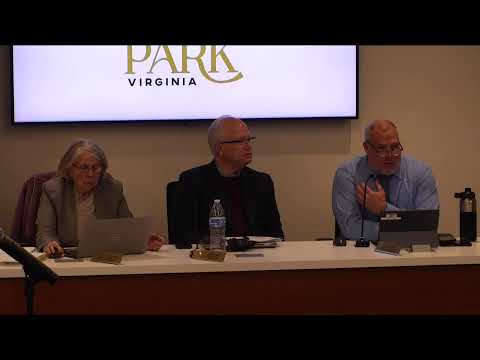
Brian Steglitz, the executive director of the Upper Occoquan Service Authority, briefed the Manassas Park governing body on Dec. 2 about two coordinated studies: a jurisdictional cost‑allocation review and a rerating study of the regional wastewater treatment plant.
Steglitz said the authority serves Manassas Park, parts of the City of Manassas, Fairfax County and Prince William County and manages a capital‑intensive operation with a roughly $625 million 10‑year capital budget. He said the jurisdictional cost‑allocation work aimed to apply cost‑of‑service principles and address equity concerns where some jurisdictions pay for services—such as hauled septic treatment—that they do not use.
"You should be paying for the service if you're using it, but if you're not, you shouldn't need to pay for it," Steglitz said while explaining the septic receiving‑facility proposal. He told council members UOSA accepts roughly 1,300 septic loads a month and that septic waste is more concentrated and costly to treat than typical municipal flow.
On capacity, Steglitz described a rerating study that stress‑tested plant processes and identified projects that could recapture latent nutrient‑removal capacity. He said the work identified a portfolio of targeted projects estimated at about $50–60 million that would recover capacity and reduce the need for a full plant expansion—an option Steglitz said could cost near $200 million to add about 6 million gallons per day of hydraulic capacity.
Steglitz said operational (O&M) costs are billed based on metered flow while capital investments are distributed based on proportional ownership. He also described a possible "capacity‑loaning" mechanism: jurisdictions that exceed their allocated nutrient‑removal share could pay a proportional share to use others' unused capital capacity, with those payments offsetting capital costs for the jurisdiction that provided the capacity.
Councilors asked whether Manassas Park would see immediate bill increases if allocations change. Steglitz replied that operational charges reflect metered use and that capital cost allocations are redistributed by ownership; he noted any capital projects would be proposed to UOSA’s board and could affect future rate proposals.
Steglitz said UOSA will draft proposed service‑agreement modifications in 2026 and return them to the member jurisdictions for action; such changes require unanimous support under the authority’s agreements.