Appellate argument asks court to limit 'loss of chance' instruction after jury confusion in finger-injury case
Loading...
Summary
In oral argument, counsel urged the court not to expand the 'loss of chance' jury instruction after a trial over a severe hand injury where jurors asked a question and the trial judge later granted a new trial; counsel said the order lacked record support and risked substituting judicial judgment for the jury's.
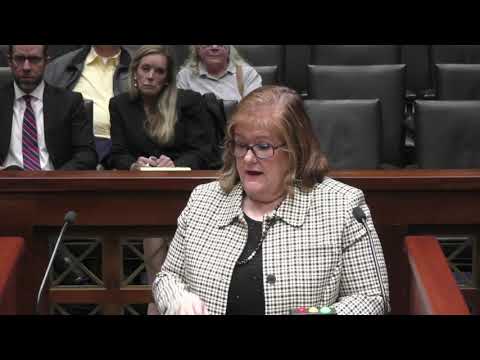
Speaker 1, an unidentified advocate in the transcript, told the court the trial judge erred in granting a new trial after a jury asked a question in a case where the plaintiff suffered a severe saw injury and ultimately lost his finger. Speaker 1 said the court had submitted a "loss of chance" instruction at trial and that the resulting new-trial order lists multiple reasons that counsel argues are not supported by the record.
The issue centers on whether the jury's question and subsequent deliberative confusion alone justify setting aside a verdict and whether the loss-of-chance instruction — historically applied in death and serious-prognosis cases — should be broadened to the facts here. Speaker 1 told the bench the record contains conflicting expert testimony about prognosis: plaintiff experts suggested part of the finger would be lost, while defense experts testified the whole finger would not survive, and at least one infectious-disease expert said the finger would have been lost regardless of treatment. Speaker 1 said those conflicts show the jury had factual choices to make and that a judge should not substitute their judgment absent clear harmful error.
Counsel repeatedly invoked precedent (identified in the transcript as Kramer and a Rudolph opinion) that requires a trial court to explain why a verdict is wrong before disturbing a jury's decision. Speaker 1 argued the trial court's order did not sufficiently explain why the jury's verdict could not stand, pointing to a one-page post-note record and limited discussion at the charge conference. On the scope of the loss-of-chance doctrine, Speaker 1 warned that expanding the instruction beyond its traditional confines (for example, death or catastrophic-prognosis cases) would increase jury-charge complexity and doctrinal uncertainty.
Speaker 2 posed clarifying questions during the argument, at one point asking whether counsel sought expansion of the doctrine; Speaker 1 responded that expansion should be constrained by the type of expert evidence described in Kramer (a less-than-50% survivability showing). The transcript includes medical detail described by counsel — references to hand surgeons, a crumbling bone observed at surgery, and competing expert percentages (one opinion referenced roughly 40% survivability; other percentages mentioned in argument included figures like 2% and 20%) — which counsel said made the record particularly fact-bound.
The argument closed with Speaker 1 urging the court not to extend the loss-of-chance instruction in a way that would invite judges or juries to apply it beyond cases where expert evidence meets the threshold described in Kramer. The oral argument transcript does not record a decision; the court's ruling, next briefing step, or eventual opinion are not included in the record provided.