Get Full Government Meeting Transcripts, Videos, & Alerts Forever!
State hospital chief outlines why forensic admissions and discharges are delayed, points to paperwork and benefit gaps
Summary
Laurie, a chief overseeing five state hospitals, told a Baltimore County coordinating council that triage rules, limited high‑security beds, documentation gaps and slow SSI processing are lengthening waits and complicating safe discharges back to the community.
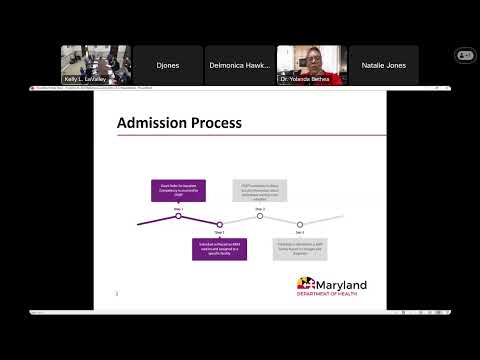
Laurie, who identified herself as the chief responsible for five state hospitals, told the Baltimore County coordinating council that admission and discharge timing is driven by legal triage, charge level and bed availability, not simply administrative delay. She said court orders come through MDEC and OSEP, then are tagged and placed on a wait list; high‑felony charges are routed to Perkins, which has a small number of maximum‑security beds and creates a bottleneck for those patients.
Laurie cited the Maryland appellate decision Hawkes v. Maryland to explain a key constraint: “the plan that the doctor signs off on has to mitigate the risk,” she said, meaning hospitals must document how returning someone to the community will not create unacceptable risk. That requirement, she said, can lengthen discharge planning for people…
Already have an account? Log in
Subscribe to keep reading
Unlock the rest of this article — and every article on Citizen Portal.
- Unlimited articles
- AI-powered breakdowns of topics, speakers, decisions, and budgets
- Instant alerts when your location has a new meeting
- Follow topics and more locations
- 1,000 AI Insights / month, plus AI Chat