Preservation panel continues hearing on proposed demolition at historic Burnham site, schedules site visit
Loading...
Summary
After learning new archival evidence tying a small pavilion at 111 Burnham Place to Daniel Burnham, the commission heard preservation experts, neighbors, and the applicant. Commissioners agreed to a site visit and requested a condition/forensics assessment before resuming consideration; the case was continued to Jan. 20, 2026.
At a Dec. Preservation Commission hearing, new archival material documenting a 1909 pavilion associated with Daniel Burnham re‑emerged as the commission considered an application to demolish and replace the residence at 111 Burnham Place in the Lakeshore Historic District.
Dan Wheeler, principal of Wheeler Kearns Architects, presented historical research and the firm's analysis of the site. Wheeler acknowledged documents from the Art Institute’s Burnham archive showing a shelter/tea house and terrace designed as part of the Burnham estate. "We now know that Burnham was involved in the shelter house and the terrace," he said, but added the structure has been significantly altered and encumbered by a 1948 addition, roof replacement and later subdivision of the lot.
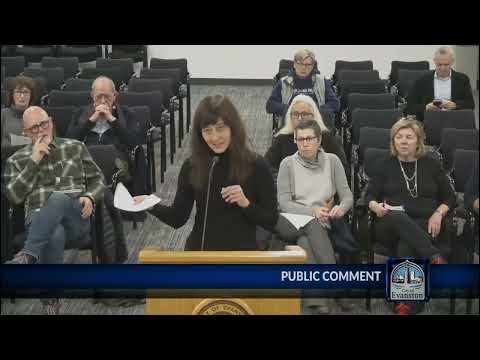
Public commenters urged preservation and investigation. Linda Damashek told the commission, "The Burnham Tea House should not be allowed to be demolished because of its extreme importance to Evanston's history," while an architectural-historian speaker urged the commission to "work with the owner to come up with a creative solution to satisfy their needs and retain this unquestionably, historically, and architecturally significant building." Landmarks Illinois' written comment, read into the record, recommended delaying a vote so the owner and commission could determine whether the eastern portion of the building could be incorporated into new design plans.
Wheeler outlined the commission's six demolition-review standards and said the site's primary public-facing feature is a surviving perimeter retaining wall that the architects propose to retain. He described the pavilion as a wood-frame, stuccoed shelter with missing roof tiles and windows and said the existing condition and grade changes complicate reuse and accessibility. "It is not the right building on this site," Wheeler said in summation, arguing adaptive reuse would be difficult given the current configuration and the client's accessibility goals.
Commissioners debated whether to assess the 1909 shelter separately from the 1948 addition, whether the surviving fabric retains sufficient integrity to communicate its history, and whether relocation or partial salvage were feasible. Several commissioners urged a pragmatic sequence: (1) coordinate a commission site visit, (2) request a focused condition/forensics report that documents framing, foundations and material integrity and addresses whether the shelter could be separated or relocated, and (3) review proposed replacement plans alongside that documentation.
Chair Klein moved to continue the case to the commission's regular Jan. 20, 2026 meeting and to coordinate a site visit with the owner and architect; a second was recorded and the continuation carried (the transcript records one abstention). The commission asked staff to work with the applicant on access and to identify specific items the condition report should address.
The continuation leaves open multiple outcomes: retention on site, relocation, selective salvage and integration, or approved demolition with a replacement that retains and interprets the site's Burnham-era elements. The commission did not take a final vote on demolition at this meeting.