
District gives phase‑2 referendum update: Franklin, Oakwood designs progress; Shapiro consolidation planned
Get AI-powered insights, summaries, and transcripts
Subscribe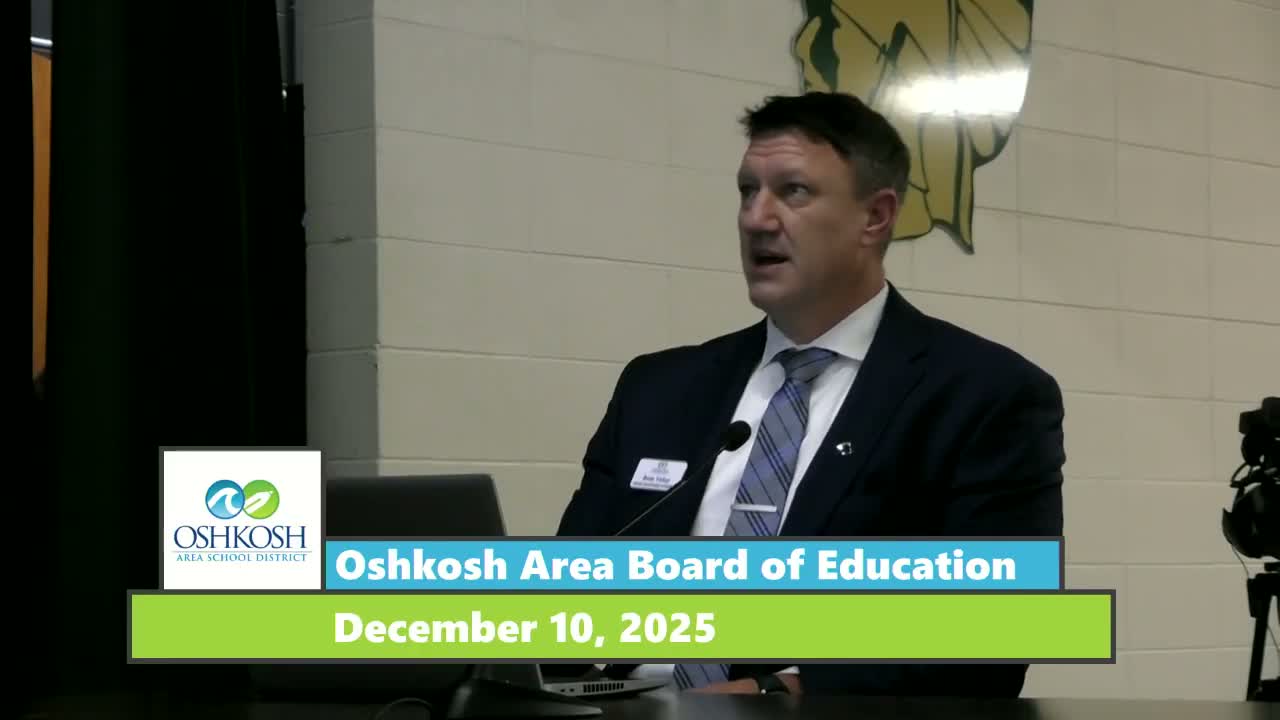
Summary
District administrators said elementary designs for Franklin and Oakwood are about 75–80% complete, Karl Traeger project awarded to Myron Construction, a new middle‑school design is in early stages with bus circulation options under review, and Shapiro students will consolidate into Roosevelt with the Shapiro site slated for demolition for a new middle school.
At the Dec. 10 board meeting, district administrator Brian Yerke presented an update on phase‑2 referendum projects.
Yerke said the Karl Traeger Elementary project bid has been awarded to Myron Construction. Franklin and Oakwood elementary designs are roughly 75–80% complete; the Franklin plan includes a dedicated kindergarten courtyard and playground, while Oakwood site plans moved the playground closer to the academic wing after community feedback about walking distances.
Initial designs for a new middle school are in a conceptual stage. Yerke said the favored circulation option would position bus drop‑off on 18th Street to ease traffic flow; the academic wing is planned as a three‑level layout that clusters special‑education spaces centrally to promote integration. District staff discussed distributed dining but recommended a traditional cafeteria layout to maintain equitable meal service across schools.
Yerke shared early concepts for a revamped auditorium and black‑box performance space at Oshkosh North High School and described visits to peer districts that informed the design. He also reviewed Shapiro consolidation plans: administrators propose moving Shapiro students into Roosevelt for a single‑site consolidation, shifting the Shapiro principal to Roosevelt to support continuity; the Shapiro site will be demolished and repurposed as the new middle‑school site under the referendum schedule.
Yerke said the district conducted community listening sessions and made design adjustments based on feedback; he encouraged continued stakeholder engagement as designs move toward final review. He noted the designs presented are not final and further refinements and public input will continue as the projects proceed.
Next steps: administration will continue design meetings (including an explicit ADA/accessibility review requested by board members), produce updated materials for board review and coordinate community communications as the referendum projects advance.