Get Full Government Meeting Transcripts, Videos, & Alerts Forever!
Get email alerts on the Land Use topic
No spam. Unsubscribe anytime.
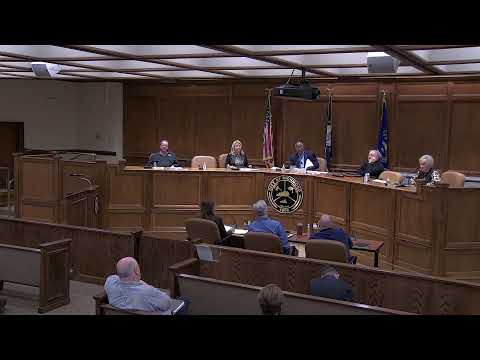
Residents raise traffic, archaeological and industry concerns at first reading of rezoning for 495 Duncannon Lane
Summary
At a first reading of Ordinance 25-17, the Richmond City Board of Commissioners heard that the city purchased 190 acres on Duncannon Lane with state and local funds and will consider rezoning it from agriculture to I-2 heavy industry; a nearby resident urged setbacks and protections for homes and archaeological sites and expressed concern about potential high-demand uses such as data centers.
The Richmond City Board of Commissioners held a first reading of Ordinance 25-17 to change the zoning classification of 495 Duncannon Lane — a roughly 190-acre tract — from AG (agriculture) to I-2 (heavy industry). The Planning and Zoning Commission previously held a public hearing and recommended the change.
City Manager (presenting) told the commission the city received $2,000,000 from a state product development initiative and matched with $2,744,000, for a total purchase price of $4,744,000 for the property. The manager said the parcel sits along the 'golden corridor' with utilities and four-lane road access, and that rezoning to industrial use aligns with the city’s comprehensive plan. Because this was a first reading, the commission did not vote on final enactment; the ordinance will return for a subsequent meeting and vote.
During public comment, Jean Marie Hibbard, a resident of a nearby subdivision off Golden Leaf Boulevard, told commissioners her neighborhood — she said its community group has about 640 members — faces a single right-turn exit onto Duncannon Lane and that additional industrial traffic could exacerbate backups. She urged the commission to consider a second exit for the subdivisions and to use setbacks to preserve the viewshed and separate heavy industrial uses from adjacent homes.
Hibbard also raised concerns that the I-2 zoning classification allows many types of heavy industry, including chemical manufacturing and data centers, and specifically warned about the local impacts of high electricity and water demand from data centers. She noted the presence of Fort Ancient period archaeological sites, including the 'Duncannon Mound,' and said she had been told by the city manager and the industrial development director that those sites would be fenced off and protected. "No one wants to live in the middle of heavy industry," she said, urging the city to reject incompatible prospects.
City staff did not identify a specific developer or end user during the discussion. The first reading included a presentation of the Planning & Zoning Commission’s written findings; final adoption will occur, if at all, after the second reading and required publication under Kentucky law.
What happens next: the ordinance returns for a subsequent reading and vote. Commissioners and staff signaled continued outreach and planning for infrastructure (including potential new subdivision exits) and site protections; residents seeking details were directed to the development ordinance and the Planning & Zoning record for additional materials.