Get Full Government Meeting Transcripts, Videos, & Alerts Forever!
Get email alerts on the Transportation Pedestrian Safety topic
No spam. Unsubscribe anytime.
Leawood council authorizes design‑build review to speed safety upgrades on 83rd Street
Summary
After hours of public testimony about recent pedestrian incidents, the Leawood City Council unanimously authorized a design‑build option to add sidewalk buffers, consistent 5‑foot sidewalks and other safety features to the planned 83rd Street reconstruction, with cost options due in January.
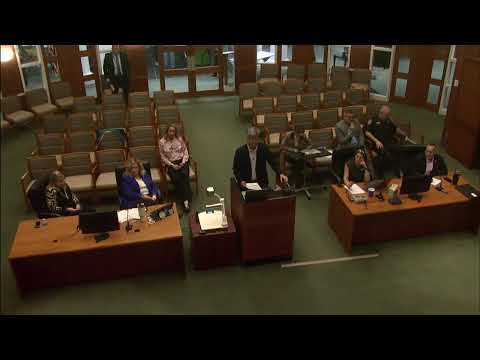
After more than an hour of public comments from neighbors who described recent crashes and near‑misses, the Leawood City Council on Monday unanimously authorized staff to pursue a design‑build option that could add sidewalk buffers and wider sidewalks to the city’s planned 83rd Street reconstruction. The council asked Public Works Director David Lay to return in January with price estimates for the existing plan and for a narrowed‑road option that would free up right‑of‑way for 5‑foot sidewalks and additional green buffer space.
The move followed emotional testimony from residents and parents. “No child should have to navigate that kind of risk just to get to school,” said Abigail Fink, who described crossings along 83rd as “incredibly difficult and honestly unsafe.” Another resident, Lindsay Murray, a clinical psychotherapist, said poor pedestrian infrastructure has developmental and mental‑health consequences: “It’s not just a safety issue, it’s a childhood issue.” A child who said he had been struck by a car asked simply: “I am the kid that got hit by the car today.”
City staff presented the project history and the current scope: a curb and pavement replacement, ADA ramp upgrades, an 8‑foot trail on the far west end and bike lanes in parts of the corridor, with a total engineer’s estimate of about $5.3 million. Lay said many segments of 83rd were built in the mid‑1990s and carry narrow sidewalks or sidewalks immediately against the curb. That layout leaves pedestrians inches from fast traffic and obstructs mobility for strollers and children.
Lay offered a two‑track approach. The city can proceed with the existing design and attempt to pull sidewalks off the back of curb where possible, he said, or the city can work directly with contractor Superior Bowen on a design‑build plan that reduces the roadway width from 32 to 29 feet, giving enough space for a 5‑foot sidewalk with a small green buffer. “If we work directly with the contractor, we’re able to get that price and then bring that back to you in January,” Lay said, adding that the design‑build route was intended to keep construction on schedule for a 2026 start rather than pushing the project into 2027.
Council members and residents pressed staff on options they’ve requested, including an intensified crossing at Winonga (a HAWK signal), expanded school zones and temporary measures such as crossing guards or cones. Staff said HAWK signals are governed by federal MUTCD warrants and typically require much higher pedestrian counts; where warrants are not met, the city relies on RRFB (rectangular rapid flashing beacon) installations with mid‑road signage and other attention‑getting measures. Staff also noted constraints around poles, retaining walls and limited right‑of‑way in several stretches.
Council members framed the decision as balancing speed and completeness. “I strongly support the suggestion that Mr. Lay came up with and commend him for the idea of coming up with a way that we could continue on the project that has been approved and yet still bring some creativity to expand that project,” the mayor said. The council voted unanimously to authorize staff to pursue the design‑build pricing and return with cost comparisons in January; staff also said they can add a standalone RRFB at 83rd & Winonga for roughly $40,000 if the council wishes to act sooner.
The council directed staff to continue engaging residents and the Bike‑Walk and Public Works committees as engineers develop the options; next steps include contractor meetings and a public update in early 2026.