
Public commenters urge Pitt County Schools to prepare for immigration-related attendance issues and to rethink calendars and curriculum clarity
Get AI-powered insights, summaries, and transcripts
Subscribe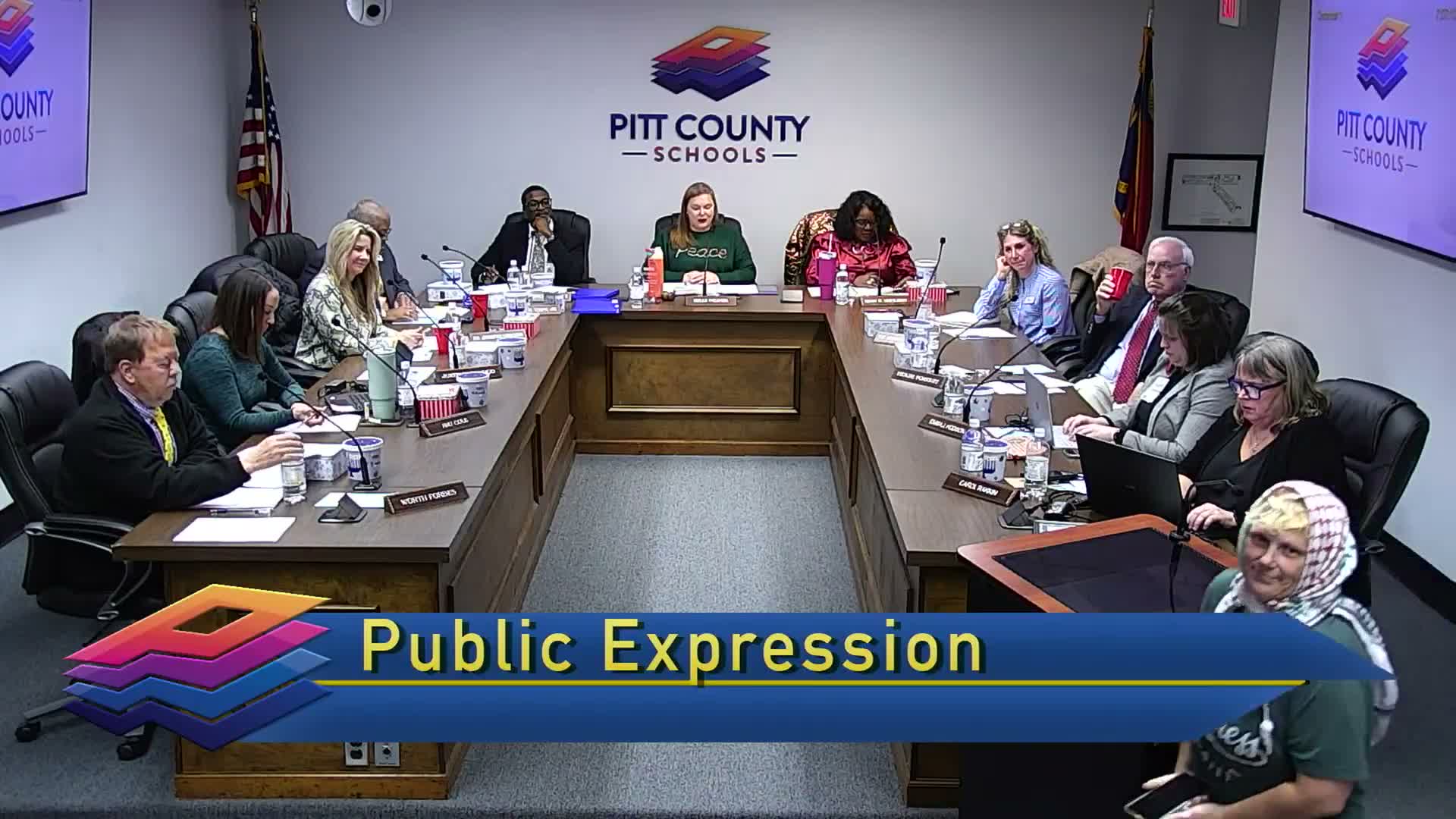
Summary
Three public-expression speakers told the board the district should prepare for possible immigration enforcement impacts on student attendance, reminded the board that the Department of Public Instruction sets curriculum standards, and asked lawmakers to allow calendar flexibility to reduce long stretches without breaks.
Three public speakers at the Dec. 1 Pitt County Board of Education meeting urged action on student supports and clearer policy guidance.
Rosa Ruiz, speaking from personal family experience, said fear of immigration enforcement is already affecting attendance among Hispanic students and asked the district to prepare. She cited the North Carolina constitution and the 1982 U.S. Supreme Court decision Plyler v. Doe, and noted a January NCDPI guidance reminding districts of legal obligations. "While no enforcement activity has been officially confirmed in Pitt County, the concern is already here," Ruiz said, urging the board to "prepare before you are forced to react."
Mario Blanchard, president of the Pitt County Association of Educators, told the board that school staff do not determine state curriculum standards and pointed parents and community members to NCDPI for standards information. Blanchard also urged a "common-sense" school calendar with more frequent breaks, saying extended stretches without breaks risk student and staff burnout and that sustained advocacy to the General Assembly would be required to change calendar rules.
A third speaker praised district innovation and board diversity and asked the board to continue sharing successful practices across attendance areas.
Board staff reminded speakers before public expression that the board would listen but would not respond during the public-expression segment and that speakers must not name staff or students when offering praise or criticism. Board counsel later presented a proposed update to Policy 23-10 (public-expression rules) for first reading and the board scheduled a second reading for Jan. 5, 2026.