Lake Forest reviews $1 million berm‑removal estimate in concept plan to remake Kavanaugh Park
Loading...
Summary
Designers presented a conceptual overhaul of Kavanaugh Park that would remove an existing berm, add playgrounds, a half basketball court, walking paths and bioswales; consultant and staff said berm removal could cost about $1 million and the project will need council approval to amend the CIP budget.
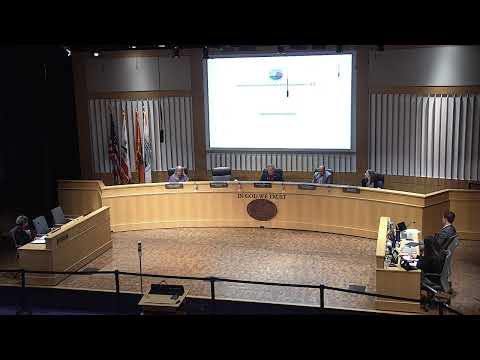
Designers and city staff on Wednesday presented a concept plan for Kavanaugh Park that would remove a large berm, add new playgrounds and fitness features, restore a half‑court basketball area and expand usable turf and walking paths.
"The existing berm is the biggest contributor to nonfunctional turf area in this park," Brian Avalos, studio director for David Volz Design, told the Community Services Commission. Avalos said the park currently contains about 194,000 square feet of nonfunctional turf — roughly 80% of the site under the study method they used — and that removing and exporting the berm would open much of that area for recreation.
Avalos estimated the earthwork for cut and export and associated tree removal at "approximately" $1,000,000, identifying soil export as the largest single line‑item in the raw construction costs. He also described the concept’s other major elements: separate play zones for ages 2–5 and 5–12 with resilient rubber surfacing, distributed fitness stations along a perimeter trail, improved ADA parking and ramps, picnic shelters, shaded play areas, and bioswales to treat stormwater on‑site.
The design team emphasized safety and visibility, saying play equipment and new sight lines were chosen to reduce hiding places. "We try to limit the space and the width of where someone can hide," Avalos said when commissioners raised concerns about climbing elements. Deputy City Manager McGovern added that the city contracted a CPTED (crime prevention through environmental design) consultant who reviewed the plan and will be invited to present to the commission during the design phase.
McGovern told the commission the city’s current capital improvement program (CIP) includes about $1,000,000 for Kavanaugh Park, but that amount was originally scoped for modest upgrades and would not cover the larger reconstruction shown in the concept. "If they want to move forward with this, they’re going to have to amend the CIP budget at some point and allocate more money towards it," McGovern said; the next formal step is a city council review.
On programming, Avalos said community outreach — an in‑person event and a digital survey with about 105 participants — consistently requested better lighting, shade, multigenerational play and pathways. The team restored a half basketball court per community feedback and described an educational court option called "fraction ball," developed in partnership with UCI, that can integrate learning markings into court paint.
Avalos called out the tradeoffs the city will face: engineering will refine final materials, playground equipment selections and tree species in the design phase, and the concept may change as staff develops engineering and cost detail. McGovern said engineering is likely to begin in summer 2026 and that final equipment selection and construction sequencing will come later. The city is also near the end of procurement for a security contract intended to provide roving guards for parks; if approved the contract could be before council as early as January.
The commission did not take a formal vote on the concept at the meeting. McGovern said staff will present the plan to the city council for consideration of additional CIP funding and next steps.