
Supreme Court of Texas hears dispute over excluded expert testimony in Diamond Hydraulics case
Get AI-powered insights, summaries, and transcripts
Subscribe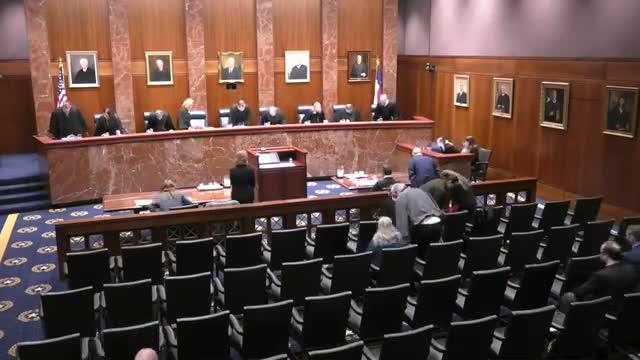
Summary
At oral argument in Diamond Hydraulics v. GAC Equipment, counsel for Diamond Hydraulics defended the trial court's exclusion of late-designated expert testimony under Texas discovery rules, while opposing counsel pressed that alternatives such as depositions or remote testimony could have cured any prejudice.
At oral argument before the Supreme Court of Texas, counsel for Diamond Hydraulics (Speaker 1) told the justices the trial court did not abuse its discretion when it excluded expert testimony that was designated well past the court's deadline. "We think that there are 3 major errors that require reversal," Speaker 1 said, identifying exclusion of expert proof and related due-process concerns as central issues.
Speaker 1 urged the court that the excluded testimony was the product of litigation choices by Diamond Hydraulics, not circumstances beyond the party's control: "This case was about a party that repeatedly failed to comply with the deadline to designate experts," Speaker 1 said, arguing that strategic decisions not to take deposition testimony or to decline offered remote testimony did not constitute "good cause" under Rule 193.6 and the court's Alvarado standard for impossibility or difficulty.
Opposing counsel (Speaker 2) interjected during argument that the petitioner had designated a different expert as a substitute, and the bench questioned whether the substitute limited opinions to those in the earlier report or adopted new views. Speaker 2 summarized that a substitute expert had been designated and raised practical concerns about surprise from newly offered opinions.
Much of the argument turned on chronology and prejudice: counsel and the court discussed how many days past the designation deadlines some experts were (hundreds of days, in counsel's characterization), and whether prior continuances and multiple trial settings justified stricter enforcement of the deadline. Speaker 1 stressed that the case had undergone several continuances and that the trial court's decision was influenced by that chronology.
The parties also debated whether deposition transcripts or remote testimony could have cured any prejudice to the opposing party. Speaker 1 said the record contained an affidavit stating an expert lived in Ohio and "did not have plans to return to Texas" for the October 3 trial setting, but argued that the affidavit did not show willingness to testify and that mere phone or affidavit statements would not establish good cause. Counsel said offers to permit Zoom testimony or trial depositions had been made but not used to build the necessary record.
Speaker 1 emphasized differences in expert qualifications and the procedural burden of allowing a late, differently qualified witness shortly before trial. The attorney noted that Dr. Horner, identified in the record as a metallurgist, had different training from the earlier disclosure and that evaluating those differences under Robinson and related factors shortly before trial could impose undue surprise on the opposing party.
Counsel pointed to record material the jury had already seen about the contested spherical bearing ' photographs and cross-examination of other witnesses ' and argued the jury had been able to consider competing theories even with the exclusion. The argument closed with counsel asking the court to apply the abuse-of-discretion standard and to leave the exclusion undisturbed given the particular chronology and litigation choices in the record.
The court's questions and the parties' exchanges focused on the interplay between Rule 193.6, the Alvarado standard for "difficult or impossible" circumstances, the Robinson factors for expert testimony, and the practical availability of alternatives such as depositions or remote testimony. No final decision was announced during argument.