
Residents report ICE activity, urge McMinnville to clarify role and protections
Get AI-powered insights, summaries, and transcripts
Subscribe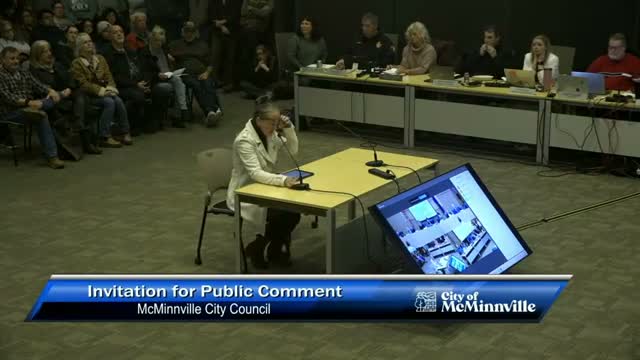
Summary
During public comment dozens of residents described aggressive immigration enforcement activity in McMinnville, reported multiple arrests (including a minor), and urged the council to provide clear protections and engage Unidos and the Attorney General; council leadership released a statement and pledged to seek guidance from the state AG.
Dozens of residents filled the council chamber Tuesday to describe what they said were aggressive immigration-enforcement actions in McMinnville and to call on city leaders to provide clarity, transparency and protection for impacted families.
Speakers told the council they had documented unmarked federal vehicles, license-plate swapping, abrupt traffic stops that "pinned" civilian cars, and aggressive arrests that in some cases involved minors. "A total of 6 McMinnville residents were arrested that day," said Miriam Vargas Corona, executive director of Unidos Bridging Community, summarizing community documentation of the November 21 operation. "Federal agents were suspected to be present in McMinnville and community members who have been trained to verify reports confirmed that federal agents were indeed in the city."
Other speakers said the operations have left families too afraid to go about daily life. "No child should have to carry that kind of fear," Stacy Mayhew told the council, urging officials to reject symbolic declarations that do not protect residents. Fabiola Alcantar, a McMinnville resident, said the presence of federal agents has "created fear and confusion" and asked what the city will do to support people who fear detention.
In response, Mayor Morris and Council President Peralta delivered a joint statement acknowledging the concerns and clarifying the city's legal limits: "The city of McMinnville does not engage or assist with federal civil immigration enforcement, and we are not notified when these operations occur," the statement said. The mayor's statement pledged to seek guidance from Oregon Attorney General Dan Rayfield, to continue supporting first responders and to advocate for timely federal communication when operations occur in the city.
Community organizations asked for follow-up meetings with city leadership, improved dispatch protocols for frightened callers, and clarity about whether license-plate reader data or other local information had been or could be shared with federal agencies. Unidos asked for an ongoing liaison to share learnings and coordinate public-safety responses; councilors and staff said they will pursue discussions and regional contacts.
What happens next: City staff said they will seek guidance from the Oregon Attorney General's office and continue outreach with Unidos and other community groups; council members said they expect to receive updates and to weigh any recommended policy changes against the Sanctuary Promise Act and applicable state and federal law.