Get Full Government Meeting Transcripts, Videos, & Alerts Forever!
Get email alerts on the Veterans Services topic
No spam. Unsubscribe anytime.
Polk County introduces new Veterans Service Officer and outlines outreach metrics
Summary
Polk County formally introduced Joe Bell as its new Veterans Service Officer and reported recent gains in claims and federal benefit dollars flowing to local veterans; county leaders said they will track additional outcome-focused KPIs and seek increased state funding.
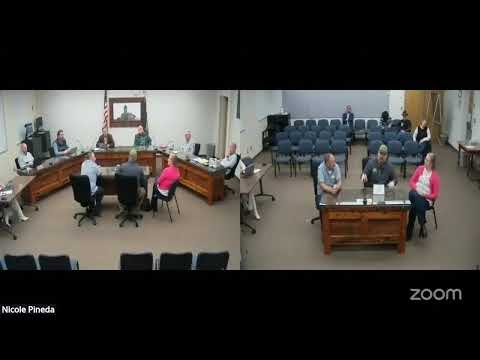
Polk County on Wednesday introduced Joe Bell as the county's new Veterans Service Officer and heard officials describe recent increases in processed claims and federal benefits directed to county residents. Bridal DeMoe, director of the county's Family and Community Outreach (FCO) department, told the Board that Bell has been on board for about three weeks and that VSO supervision has moved under program manager Stephanie Gilbert to improve consistency across services.
Bell described his outreach approach and local experience, saying he's willing to "travel anywhere in the county to meet veterans" to connect them with benefits and services. He gave examples of recent work: of 114 claims filed as of last week, 58 had positive outcomes; the office reported a monthly award value of about $147,000 and a retroactive total of roughly $390,000 tied to those claims. DeMoe and Bell said Polk County is on pace to bring in roughly $3.1 million annually in federal benefit dollars if current trends hold, money they emphasized largely circulates in the local economy.
Commissioners questioned how the county should measure performance beyond outputs. An unidentified commissioner said quarterly reporting that tracks expenditures and outputs "doesn't tell anybody a whole lot in terms of outcomes," and asked that the county track outcome-focused KPIs to support future advocacy for state resources. Bell and DeMoe said the county already files ODVA-required quarterly reports and will supplement those with internal metrics captured in FCO's navigator program, including claims success rate and civic-engagement leads, to give a fuller picture of services and outcomes.
Officials also described how the VSO coordinates with other county teams on non-benefits needs, noting casework where staff helped a homeless veteran obtain immediate supplies, coordinated entry intake and housing referrals, and expedited a favorable decision for an 81-year-old veteran in under a month. DeMoe asked the board to advocate for increased state funding—Polk County receives $134,000 annually from the Oregon Department of Veterans' Affairs to serve an estimated 7,000 veterans—and said county contributions currently fill gaps to maintain full-time staff and reduce wait times.
The board did not take formal action on funding. DeMoe and Gilbert offered to provide commissioners with periodic performance reports that combine ODVA-required outputs with outcome-focused indicators to support local advocacy.