Get Full Government Meeting Transcripts, Videos, & Alerts Forever!
Get email alerts on the Goal 3 Sel topic
No spam. Unsubscribe anytime.
Board hears Goal 3 update: Panorama shows high elementary favorability, declines in belonging for some groups; EduCLIMBER pilot launched
Summary
District staff presented Goal 3 (social-emotional learning) metrics, saying Panorama results show strong elementary self-management but declines in sense of belonging from elementary to high school and identifying 9—C12 and students with 504 plans as focus areas; the district is piloting EduCLIMBER to track SEL interventions and will provide longitudinal data requested by the board.
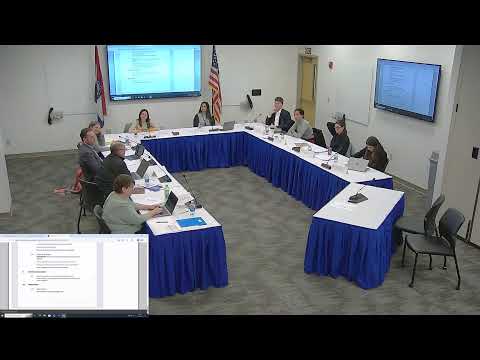
District student services staff presented an update on Goal 3 of the strategic plan, which focuses on social-emotional learning (SEL) and student well-being, and answered board members— questions about data, disaggregation and next steps.
Dr. Garganigo said three of the plan—s four objectives rely on Panorama survey data and one uses the Missouri State Student Survey (administered every two years; most recent data cited as 2024). He framed the initiative as aligning SEL competencies with the existing MTSS (Multi-Tiered System of Supports) process so the district can teach and track social-emotional skills alongside academics.
Mike Seavey described Panorama scoring and results: "To interpret this data, 82 percent of students, grades 3 through 5, rated themselves favorably on their self-management skills in 2024. In 2025, 81 percent rated themselves favorably." He said sense-of-belonging scores tend to drop as students progress from elementary to middle to high school, but noted that when compared to Panorama-participating districts Clayton often ranks highly (elementary ~90th percentile in national comparisons).
Presenters highlighted identity-group gaps: the district flagged 9—C12 cohorts and students with 504 plans as areas needing attention and suggested using vertical PLCs (professional learning communities) and a coordinated data-review process to target interventions. Staff said they will refine Panorama measures to better align to identified competencies and are piloting EduCLIMBER to record and visualize SEL interventions and progress monitoring across K—C8.
Board members asked for additional materials and clarity: requests included longitudinal charts that follow a single cohort over time, statistical significance thresholds for percent changes ("When do I care?" as one member asked), and finer grade-level splits at the high school. Presenters agreed to provide multiyear longitudinal data and to bring follow-up analysis to the student services PLC and future meetings.
Why it matters: The presentation identified measurable differences across grade bands and student groups that the district plans to address through aligned curriculum, data systems and targeted interventions. Board members emphasized the need for deeper analysis before determining any new policy or resource shifts.
What—s next: Staff will provide longitudinal, disaggregated data and continue a pilot year of EduCLIMBER for SEL interventions; the board will review revised objectives at the formal annual CSIP presentation beginning in August 2026.