Wichita and Sedgwick County outline complementary plan for regional fire training center
December 01, 2025 | Sedgwick County, Kansas
This article was created by AI summarizing key points discussed. AI makes mistakes, so for full details and context, please refer to the video of the full meeting. Please report any errors so we can fix them. Report an error »
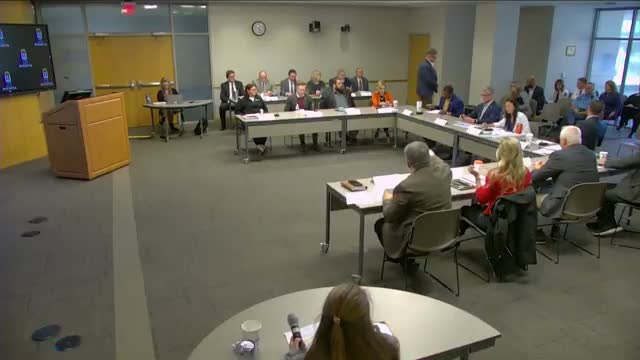
"Our first assumption was not to exceed $6,300,000," Tammy Snow, Wichita fire chief, said as she reviewed the study team’s charter and cost assumptions. The work examined converting two softball fields near the existing regional training center or using donated county land behind Station 36 to build training props, classrooms and support infrastructure.
Presenters said the current regional training center is at or near capacity for live‑fire and tower training, and demand is shared by many agencies. About 69% of non‑classroom training at the center is for tower and Conex structures, and the county currently receives under 20% of facility time. The chiefs noted that dozens of other agencies use the site, from local municipal departments to McConnell Air Force Base and area schools.
The two camps concept would let Wichita focus on urban/high‑rise props (the "Connex Village" concept in its CIP) while Sedgwick County builds rural and rescue props (tender operations, grain‑silo rescue, structural collapse). Chiefs said the split would reduce duplication but keep joint training opportunities; they pointed to roughly 5,620 joint responses in 2024 (4,025 through August 2025) as evidence that interagency training delivers operational benefits.
Land issues and federal land‑use constraints complicate the plan: converting city ball fields requires replacement property of comparable fair market value and a multiyear process under land‑and‑water conservation funding rules; estimated replacement costs were $375,000 to $1.1 million. County leaders said donated land behind Station 36 offers space for rural props and potential reuse of construction material already stored onsite.
Next steps include finalizing modest classroom designs (25‑person spaces), completing architectural plans (county CIP 2027; Wichita CIP 2028) and formalizing a joint training agreement and co‑branding for the two campuses. Chiefs said they will avoid creating large, duplicate facilities while adding capacity where needed.
The en banc did not approve any capital allocation at the meeting; chiefs were asked to return with more detailed designs and scheduling information for budget committees.
View the Full Meeting & All Its Details
This article offers just a summary. Unlock complete video, transcripts, and insights as a Founder Member.
30-day money-back guarantee
Sponsors
Proudly supported by sponsors who keep Kansas articles free in 2026

