
Sedgwick County warns KDOC funding formula will cut services, risk more prison sentences
Get AI-powered insights, summaries, and transcripts
Subscribe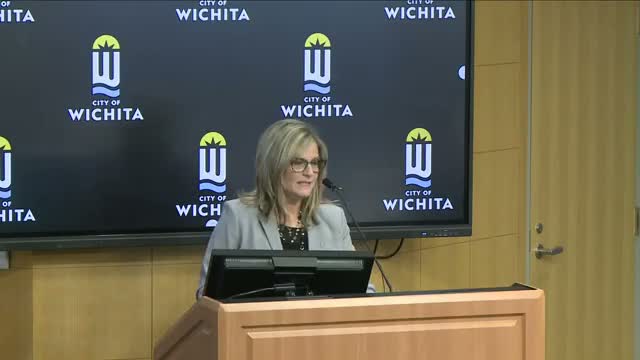
Summary
County corrections leaders told Wichita and county elected officials that a proposed KDOC funding formula would reduce Sedgwick County’s allocation about 38% over three years, threaten behavioral health programs and about 20 positions, and could push more felony cases back into prison rather than community supervision.
Sedgwick County corrections leaders told city and county elected officials on Oct. 29 that a proposed Kansas Department of Corrections funding formula would sharply reduce local community-corrections funding and jeopardize programs used to supervise high‑risk felony offenders in the community.
"Doing this work with 40% less budget will be nearly impossible," Laurie Gibbs, deputy director of adult programs for Sedgwick County Department of Corrections, said in the City Hall en banc. Gibbs described clients supervised by county community corrections as among the state’s most serious offenders — often addicted, mentally ill or homeless — and said the office uses risk‑and‑needs assessments, intensive supervision, residential placement and specialty courts to try to reduce long‑term recidivism.
Steve Stonehouse, director of the county department, told the joint meeting that the new KDOC formula mixes caseload composition with other factors such as poverty rates and crime indices. He said Sedgwick County has been told the change will cut its allocation roughly 38% over three years — about $700,000 a year — and that about $685,000 in behavioral‑health funding could be reduced by half. "We're going to lose 20 positions over 3 years and the majority of the programs she talked about are going away," Stonehouse said.
County and city officials said they feared reduced supervision would narrow courts’ ability to grant community‑based sentences. Stonehouse and commissioners said courts often rely on community corrections to monitor offenders granted a departure from presumptive prison sentences; if services shrink, judges may be less likely to confer those departures and more likely to impose prison. "We anticipate that those will end, that they will just send them to prison," Stonehouse said.
Officials also flagged an uneven distribution of funds under the new formula. Commissioners noted that some multi‑county districts gained under the formula while Sedgwick — which supervises a large felony population and receives many 'courtesy' transfers from other counties — faces deep cuts. The county described 2023 courtesy‑case activity that year as 278 transfers received, about 95% from other counties, and noted the community corrections caseload runs about 1,200 people at any time with roughly 320 courtesy cases.
Elected leaders urged immediate responses: asking KDOC Secretary for a pause or 'hold harmless' proviso, seeking a legislative review of the Community Corrections Act of 1978 and coordinating a joint county‑city outreach to the governor and state legislators. "We're asking either for our hold harmless clause, a pause pending an entire look at the whole Community Corrections Act, or just throw it all altogether and start over," Stonehouse said of the options officials are pursuing.
What happens next: officials said a Select Committee hearing on the funding changes was scheduled; they also discussed drafting joint letters and mobilizing a unified local legislative agenda if KDOC does not revise allocations. The en banc did not take any formal vote or adopt a binding local policy at the meeting.