Get Full Government Meeting Transcripts, Videos, & Alerts Forever!
Get email alerts on the Fields And Facilities topic
No spam. Unsubscribe anytime.
Committee tables decision on turf for new Salem High, reviews MSBA schedule and budget framing
Summary
Committee members debated synthetic turf versus natural grass for the new high school fields, raising lifecycle-cost, maintenance, environmental (PFAS/microplastics/heat) and equity concerns. Staff reviewed MSBA/dese submission schedule and conservative budget assumptions; the committee agreed to table any vote pending lifecycle-cost data and consultant input.
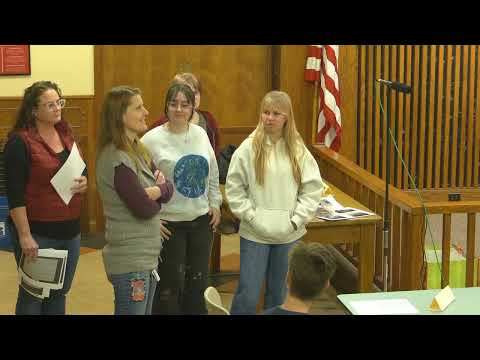
The School Building Committee deferred a decision on whether new fields at the Salem High School campus should be synthetic turf or natural grass after a lengthy debate on maintenance, environmental impacts and lifecycle costs.
A project member explained that the schematic pricing currently treats several new high‑school fields as synthetic turf while Horace Mann is priced as grass. The presenter also described a utilization analysis — citing a researcher who put well-maintained natural turf at a 1,000-hour annual usage limit — and noted the committee’s weighted-field usage estimate exceeded that guideline, which informed the recommendation to price turf for heavily used fields.
Opponents and some committee members raised multiple concerns: long-term maintenance and replacement costs often fall to the city rather than the school, warranties can be voided by underinvestment, artificial turf can introduce microplastic run‑off and contain PFAS or phthalates, and turf increases local heat impacts. One attendee warned that drainage systems for artificial fields require careful design to avoid sending those materials into Forest River and nearby wetlands.
A district representative told the committee the district lacks a large grounds crew to keep grass fields playable and emphasized equity and access: with limited field space in the city, synthetic turf could extend the season, reduce cancellations and provide comparable access across boys’ and girls’ teams. Other members said technical experts and consultants (Perkins and Will and field specialists) should propose material choices and mitigation strategies informed by lifecycle‑cost comparisons, maintenance plans, and environmental-safety measures.
Staff also briefed the committee on the schematic submission process: DESE materials for special education were filed in parallel, the schematic design binder will include hundreds of drawings and reports, and the Massachusetts School Building Authority (MSBA) review is scheduled to culminate in a Feb. 25 board meeting. Presenters discussed reimbursement caps recently raised by the MSBA (examples and per‑square‑foot allowances were shown) and recommended holding conservative contingencies (the construction contingency used for discussion was 3%).
Rather than a binding vote, the committee agreed to table the surfacing decision, request lifecycle-cost comparisons (implementation and maintenance), current field-condition and usage data, environmental-impact mitigation proposals (drainage, PFAS/microplastics concerns, heat-island effects), and consultant recommendations for materials and long-term maintenance budgeting. The committee also approved an invoice package via the finance working group totaling $124,777.68 (Anser $18,482.50; Perkins and Will $106,295.18).