Get Full Government Meeting Transcripts, Videos, & Alerts Forever!
Get email alerts on the Endangered Species Rescue topic
No spam. Unsubscribe anytime.
UDOT plane flies endangered woundfin from New Mexico to Logan to reduce transport risk
Summary
UDOT’s Division of Aeronautics flew federally listed woundfin from a hatchery near Roswell, N.M., to a Logan facility in one day last week at the request of the Utah Department of Natural Resources, shortening transit time and lowering mortality risk compared with a 22-hour ground transfer.
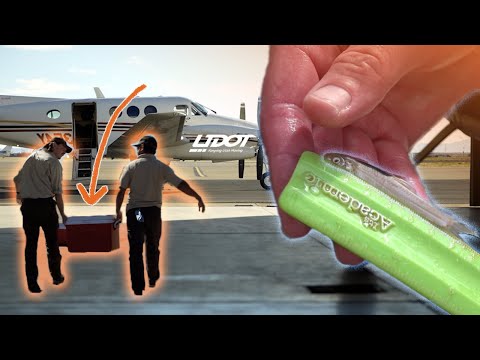
A Utah Department of Transportation aircraft carried federally listed woundfin from a hatchery near Roswell, New Mexico, to a Logan research facility in a single day last week after the Department of Natural Resources asked for help, according to participants in the transfer.
"So many folks didn't know this, but state of Utah actually has a plane, and that's ran through the division of with UDOT," said Speaker 1, who introduced the operation and said state agencies can request the Division of Aeronautics for interagency transport. Staff removed seats and prepared the aircraft to accommodate live fish, participants said.
Speaker 2, identified in the transcript as UDOT aviation staff, said the agencies "share a hangar with the DNR pilots" and that the UDOT airplane "is faster, flies higher, and it is an all weather airplane," features the team said made aerial transport preferable for the species' welfare. The aircraft planned to cruise at roughly 23,000–25,000 feet while maintaining cabin pressure equivalent to about 8,000–9,000 feet, a condition staff confirmed would be acceptable for the fish and accompanying personnel.
"They're native only to this area, the Virgin River actually. They are federally listed as endangered species," said Speaker 3, recorded in the transcript as DNR staff. The agency described the Roswell hatchery as logistically difficult to reach by commercial flights; staff said the priority was preventing extinction.
DNR staff described the logistics: fish were to be placed in oxygenated bags, then set into coolers — described by a speaker as a "river in the sky" — and handlers brought contingency equipment, including compressed oxygen and an aerator. "That's probably a little overkill hopefully, but I've planned for every possibility of trying to keep these fish as comfortable as we can," Speaker 4 said in the transcript.
Participants contrasted aerial and ground transport. According to the transcript, the team expected a roughly two-hour flight compared with a roughly 22-hour truck journey. "That is gonna prevent us having a catastrophic loss of fish, like, in a truck being driven for, you know, like, 15 plus hours," Speaker 3 said. Speakers also discussed tight budgets and suggested the flight could be cheaper in the long run because of reduced time and risk.
After arrival, the Logan facility planned to spawn woundfin and raise young-of-year with the eventual goal of releasing fish back into the wild to restore populations. "We will be raising them in our facility, spawning them and trying to get as many young of year as we can to real hopefully release back into the wild," Speaker 4 said.
No formal votes or regulatory actions are recorded in the transcript. The transfer was described as an interagency operation coordinated between UDOT aviation staff and DNR personnel to move an endangered species quickly and safely.
Next steps noted in the discussion included husbandry and propagation work at the Logan facility; speakers emphasized the urgency of preventing extinction and the agencies' shared effort to use available transport assets to support species recovery.