Get email alerts on the Land Use Ordinance topic
No spam. Unsubscribe anytime.
Morrison County planning panel backs ordinance changes on lot reductions, Shoreland contractor licensing and septic reporting
Summary
The Morrison County Planning Commission on Nov. 25 voted to recommend county board approval of three ordinance amendments: tighter lot-reduction rules to prevent nonconforming parcels, a Shoreland-area contractor licensing requirement with bond and training, and a sanitary-system ‘self-fail’ reporting option; the package is scheduled to go before the county board.
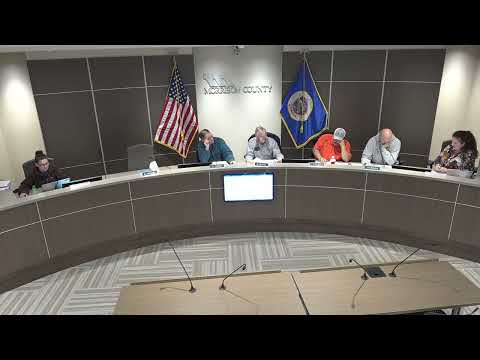
The Morrison County Planning Commission voted Nov. 25 to recommend that the County Board adopt three proposed land-use ordinance amendments covering lot reductions, Shoreland contractor licensing and sanitary-system inspection procedures. The commission forwarded the package after a staff presentation and a unanimous recommendation vote.
The three changes address separate parts of the county code. Amy, land services staff, summarized the first change to section 302.3 as a clarification to the existing lot-reduction prohibition, saying, “no lot of record shall be reduced in size in a way that causes it to fall below the district requirements of this ordinance or that results in the existing building or buildings and or uses to become nonconforming.” That amendment is designed to prevent parcel splits that leave residual lots that fail minimum district requirements or create nonconforming setbacks or uses (a concern the staff said commonly arises with metes-and-bounds splits and feedlot acreage requirements).
The second addition would create a new licensing requirement for contractors working in the Shoreland District. “Any person, firm, corporate or corporation that engages in the business of excavating, landscaping, grading, or hauling fill within the Shoreland District will need to be licensed by the county,” Amy said, noting the rule would require a bond and mandatory county training and that permits would not be issued for work performed by unlicensed contractors. The staff clarified the requirement applies to those “in the business” and does not prohibit a property owner from doing their own work: “a do it yourselfer is not in the business,” Amy said.
Amy described the licensing term and training: licenses would be valid for two years with an education requirement every two years, and the license fee would cover the county’s cost to provide training. The proposal sets a target implementation timeline so the new rules would not take effect immediately; Amy said the sections would be presented to the county board but “would not be effective until May 1” to allow time for contractor notification, training setup and adoption of a fee in the 2026 fee schedule.
The third amendment affects sanitary systems and water-well standards (section 1300). Staff described inspection triggers — including property conveyance, Shoreland permit activity and permits to expand homes — and introduced an option allowing a property owner to “self-fail” a known failing septic system by going on record and agreeing to upgrade it, rather than hiring an inspector in that circumstance. Amy said the change preserves the county’s inspection authority while giving owners an option to avoid inspection expense when they already know the system will fail.
After staff questions and clarifications, the commission opened the public-comment period; after asking three times the chair recorded that no members of the public wished to speak and closed the comment portion. Commissioner Marvin moved to recommend adoption of the ordinance changes and the motion was seconded; the roll call yielded affirmative responses from commissioners in attendance and the motion passed. The commission will forward its recommendation to the Morrison County Board of Commissioners for final action.
The commission also approved the Oct. 28, 2025 meeting minutes and adjourned at 06:18.
What happens next: the county board will consider the commission’s recommendation at its next regular meeting; the proposed ordinance sections, if adopted by the board, were described by staff as scheduled to become effective May 1 pending board action and finalization of the 2026 fee schedule.
AI generated
The text on this page is AI generated. Summaries, highlights, analysis, and video transcripts are all produced from the original source material.
AI can make mistakes, so if you spot one, and we will fix it for everyone.
Note: the source content is unaltered by us. Any content source we link to, be it a video, an audio recording, or a document, is presented exactly as its publisher released it. That publisher is usually a government body, sometimes an individual official or another organisation.