
Salt Lake City council signals support to remove numeric limit on unrelated residents
Get AI-powered insights, summaries, and transcripts
Subscribe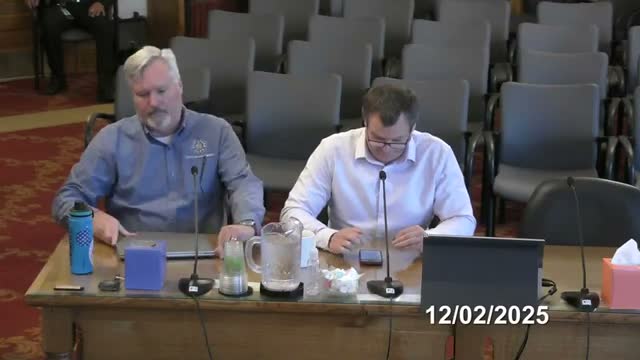
Summary
City planning staff briefed the council on a proposal to change the zoning code's definition of "family," noting enforcement challenges and housing affordability concerns. A straw poll showed council support for eliminating the current numeric limit on unrelated people living together and staff will draft a text amendment for public review.
Planning staff presented a review of the city's zoning definition of "family" and recommended next steps after an April 2025 legislative intent asked the administration to propose changes. Nick Tarbeck summarized the history of the rule, saying the code evolved from a broadly permissive 1927 definition to a 1978 rule that allows relatives or up to three unrelated people to live together. Tarbeck told the council the current wording forces households into binary categories and is difficult to enforce.
"You can only be one of those three things," Tarbeck said, adding that the restriction can be "in this day and age an absurd regulation." He and civil enforcement staff described how proving familial relationships requires documentation the city should not demand and leaves enforcement officers with few practical options.
The administration presented three options: raise the numeric cap, allow a mix of related and unrelated occupants, or remove the numeric limit entirely. Staff said option 3 best addresses enforcement, affordability and equity concerns, and recommended bringing draft code language to public outreach.
Council members asked about alternatives that measure occupancy by bedrooms or minimum square footage per person as a proxy for overcrowding. Planning and enforcement staff cautioned those alternatives can be hard to verify on older houses that lack up-to-date floor plans, and noted the building code already establishes minimum square feet per occupant for some situations.
After discussion, Councilmember Mano proposed a straw poll supporting option 3 (remove the numerical occupancy limit and the related/unrelated distinction). The chair recorded five members in favor. Staff said it will take the council direction and draft a text amendment for public review and hearings.
The council's next step is for planning staff to prepare ordinance language and a public outreach schedule; no formal ordinance was introduced or adopted during the work session.