Get Full Government Meeting Transcripts, Videos, & Alerts Forever!
Get email alerts on the Roadway Crossing Ordinance topic
No spam. Unsubscribe anytime.
Worth County hears industry concerns about proposed roadway‑crossing ordinance
Summary
At a public hearing, a Summit project manager warned that the proposed Worth County roadway‑crossing ordinance could conflict with state IUC permits and alter pipeline routing; county officials said the ordinance aims to protect right‑of‑way and avoid future relocations. The board scheduled a second reading next Monday.
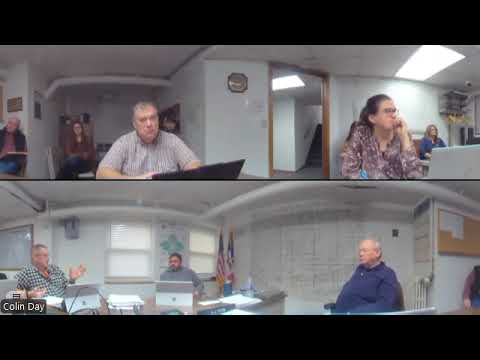
Worth County opened a public hearing on a proposed county roadway crossing ordinance that would govern how utilities, including pipelines, cross county roads. Brett Nees, senior project manager for Summit, told the board the measure risks conflicting with state permitting and could force route changes or stop construction even after the Iowa Utilities Commission (IUC) grants approval. "It creates the possibility of changing the pipeline route or even stopping construction altogether even when the IUC has already granted approval," Nees said.
Unidentified Speaker 1, speaking for county staff during the hearing, said the county’s priority is protecting county right‑of‑way and preventing utilities from being located where they would interfere with road widening or bridge replacement. The speaker cited the METCD warranting process for stop signs and said the ordinance includes provisions intended to keep high‑pressure lines away from critical bridge structures and intersections to avoid future relocations. "We just want to make sure that when we're working in our own right of way, we're not being encumbered by those utilities," the speaker said.
Neal and industry commenters also discussed timing: Nees noted the county review under the proposed ordinance would begin only after an IUC permit is approved, including any appeals, which he said creates uncertainty because construction often proceeds during appeals. He cited examples where routing shifted during state hearings and referenced court decisions that have invalidated local setbacks that conflict with state approvals.
Public commenters emphasized local knowledge of roads and bridges. An unidentified member of the public said state regulators "have never been out here" and therefore lack local understanding of ingress points, bridges and local conditions. The board closed the hearing after public comment, voted to schedule a second reading of the ordinance for the following Monday at 9:00 a.m., and adjourned.
What happens next: The board plans a second reading and another public opportunity before any ordinance takes effect. The transcript did not include the meeting date or further ordinance text; the board recorded the vote to close the hearing and to schedule the next reading by voice vote.